Your cart

Product Title
Option 1 / Option 2 / Option 3
Product Note
Subscription Plan Info
Product Discount (-$0)
COUPON1 (-$0)
$0
$0
-
+
Your cart is currently empty.
Enter discount code
Thank you! Your submission has been received!
Oops! Something went wrong while submitting the form.
Coupon1
Coupon2
Cart note
Subtotal
$0
COUPON2
-$0
Order Discount
-$0
Cart Total
$0

Fasting Q&A

Discover peace in your life through biblically based fasting. Learn why and how to bring your needs to the Creator of the universe with this spiritual discipline.

Fasting Q&A

Discover peace in your life through biblically based fasting. Learn why and how to bring your needs to the Creator of the universe with this spiritual discipline.

Fasting begins when you as a Christ follower humbly ask God to provide a way for you to know Him better. Then as you fast, God meets you on the path and guides you to experience Him more intimately. Anyone who has committed themselves to the discipline of routine fasting knows firsthand the feeling of being embraced by God. As Psalm 91 describes, you are protected under the wings of God.

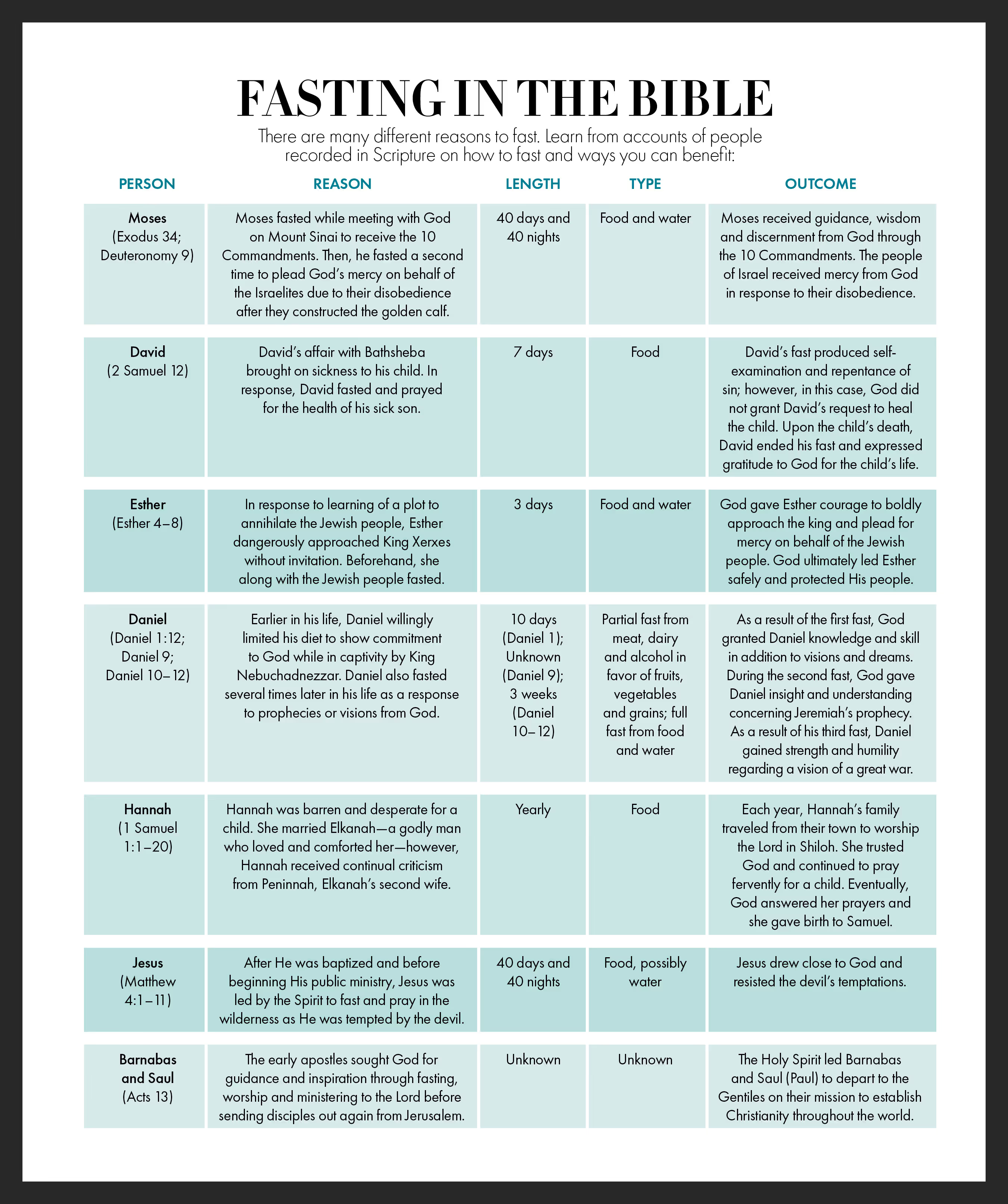
The Bible shares accounts of people who fasted, their reasons for fasting, what they gave up and the outcomes. These examples help us get started, but for the most part it’s our job, under the Holy Spirit’s guidance, to establish our individual type of fast and then fulfill it. Fasting isn’t a diet. It’s based on personal faith and established between you and God.

Like anything in life, fasting works best when you put your all into it. This means making a commitment to fast and being disciplined to complete it. You benefit most when your time of fast includes praise, worship, Scripture reading, prayer and time listening to God. Any fast requires some uninterrupted solitude.

Each fasting endeavor presents some struggles but also provides opportunities to lean on God and deepen your relationship with Him. Sometimes, the Holy Spirit comes near at a certain point in a fast, you sense a calm and the anxiousness deep inside you melts away. You may experience the peace that passes all understanding. Other times as you read the Bible, certain verses become illuminated, and you receive special clarity and understanding of Scripture and how it can change your life. Like some characters in the Bible, however, you may not receive the outcome you desire. Regardless, fasting is a reminder that God is sovereign and provides for all of our needs. These experiences are among the reasons that God, through His written Word, the Bible, encourages us to fast and why the ancient practice of intentional sacrifice stands the test of time for followers who want a life-changing faith.

Q: What is fasting?

A: Fasting refers to abstaining from something, often food or water, for a predetermined period. Over the past several years, different types of fasting have gained popularity for its helpful contributions toward weight loss, lowering of blood pressure and other health benefits. However, from a biblical standpoint, the primary purpose of fasting isn’t for our physical health, but our spiritual well-being (Isaiah 58.) Fasting provides an opportunity to be focused with our time, as we present our needs to the Creator of the universe. Why would the Creator of the universe be concerned about what’s on our minds? Because we’re His creation and He deeply cares for us—including our everyday (or not so) problems.

A: To put it simply, yes. Scripture indicates several examples of people fasting from food, wine or water for various reasons and lengths of time. However, the purpose for fasting is to set apart intentional time to seek God and His plan for your life, not just to give up all food and drink (Isaiah 58). Most people eat several times per day, so it’s one activity we can limit in order to give extra time to God through prayer, worship, reading of Scripture or other spiritual disciplines that allow you to express humility and an effort to understand who God is, how He works, what His plan is for our lives—and most importantly, how we can better serve Him. For some, longer fasts from food may not be possible or medically recommended, so it’s important to seek advice from a medical professional before attempting. Many types of fasts exist. Partial-food fasts as performed by Daniel may be an option (Daniel 1), or even giving up hobbies, media or other regular daily activities. For example, you could conduct a weekly 24-hour water-only fast that starts at midnight and ends the following night, or try an annual monthlong abstinence from social media and TV.  The key is to use the time afforded intentionally.

A: Fasting has been used as a therapeutic practice since at least the 5th century B.C. According to the Encyclopedia Britannica, the Greek physician Hippocrates recommended it as a way for some patients to battle illnesses. Ancient people and civilizations throughout the world have fasted for various purposes, such as a form of penance, a way to gain favor or divine teaching from a deity and even in some cases a form of protest. Throughout Scripture, there are countless examples of people who fasted. Even Jesus fasted and expected it would be a regular practice of His followers.

Q: Why should I fast?

A: Fasting can greatly benefit our lives, as it can help us to reset our perspective to what God desires and His purposes. Throughout Scripture, you’ll find many examples of people who fasted for various reasons and experienced spiritual breakthroughs.

More

Faith

Stories

Read more
Q: How do I fast?

A: Fasting sounds simple, yet the world, our sin and the devil can introduce road blocks to prevent us from fasting. Here is a step-by-step process to help:

  1. Find a purpose. There are many reasons to fast. However, it’s critical that your reason for fasting is God-centered. Use prayer, Scripture and the advice of mature believers to better understand what godly intentions look like.
  2. Determine what you will fast. If you need help choosing a thing to fast, seek God through prayer and ask Him to bring something to your mind that may be a distraction to following His will. Make sure that your fast does not negatively impact another person. For example, if you regularly have family dinners, let your loved ones know ahead of time instead of being a no-show at the table.
  3. Set a duration. Consider your health and daily responsibilities when deciding how long you will fast. Is it reasonable to stop eating for 21 days? Potentially, but you should weigh the outcomes and intention before doing so. Remember, Jesus desires mercy first rather than sacrifice (Matthew 9:13).
  4. Prepare. Be proactive about identifying potential obstacles that may prevent you from completing the fast, and find ways to defeat those when/if they happen.
  5. Engage. Once you’ve begun your fast, it’s critical to practice spiritual disciplines during your extra time, like reading the Bible, memorizing Scripture, meditating or listening to praise/worship music. These moments should be about listening, rather than speaking, so don’t spend your time counting down until the end. Looking forward to the end of the fast doesn’t reflect humility or a desire to spend time with God.
  6. Break. End the fast with prayers of gratitude to God. Reflect on what you may have learned, and if godly action is required go forth.  (For more information, read “How to Break a Fast,” below.)

Importance of Prayer During a Fast

Fasting may leave you in a weakened physical state, which can be an opportune time for the devil to distract you with temptation. If you find yourself struggling, remember Jesus instructed His Disciples to “Watch and pray so that you will not fall into temptation. The spirit is willing, but the flesh is weak” (Matthew 26:41). Read through the truths of Psalm 91.

How to Break a Fast

When your designated time for fasting is finished, conclude the time with prayer before God. Ask the Holy Spirit to reveal any sin in your life and seek forgiveness from God. Regardless of the outcome of the fast, praise and thank God for His continual provision and faithfulness in your life and the lives of those around you.

As a follower of Jesus, you may also choose to take communion as part of breaking your fast. It is a symbolic way to show we belong to Jesus and to remember Christ’s sacrifice on the Cross for our salvation (Luke 22:19–20). To do so, first examine your heart and mind for any unconfessed sin and repent before God. Jesus’ Disciples used bread and wine as communion elements; however, you can substitute crackers and grape juice, if desired, to represent Christ’s body and His blood. End the time praising God for Jesus’ promise of salvation.

Prayer for Ending a Fast:

Dear Lord, as I break my fast, I recognize my need for physical and spiritual sustenance that can only come from You. I bring my requests before You with thanksgiving, confidently knowing that Your peace will guard my heart and mind (Philippians 4:6–7). Thank you for providing for my needs. Bless this food and let it continually remind me of Your grace and mercy in my daily life. In Jesus’ name, I pray. Amen.

More

Health

Stories

Read more

Related Categories