Your cart

Product Title
Option 1 / Option 2 / Option 3
Product Note
Subscription Plan Info
Product Discount (-$0)
COUPON1 (-$0)
$0
$0
-
+
Your cart is currently empty.
Enter discount code
Thank you! Your submission has been received!
Oops! Something went wrong while submitting the form.
Coupon1
Coupon2
Cart note
Subtotal
$0
COUPON2
-$0
Order Discount
-$0
Cart Total
$0

Get to Know the 10 Commandments

The Ten Commandments are as relevant today as they were to Moses and the Israelites when God inscribed these enduring laws into stone.
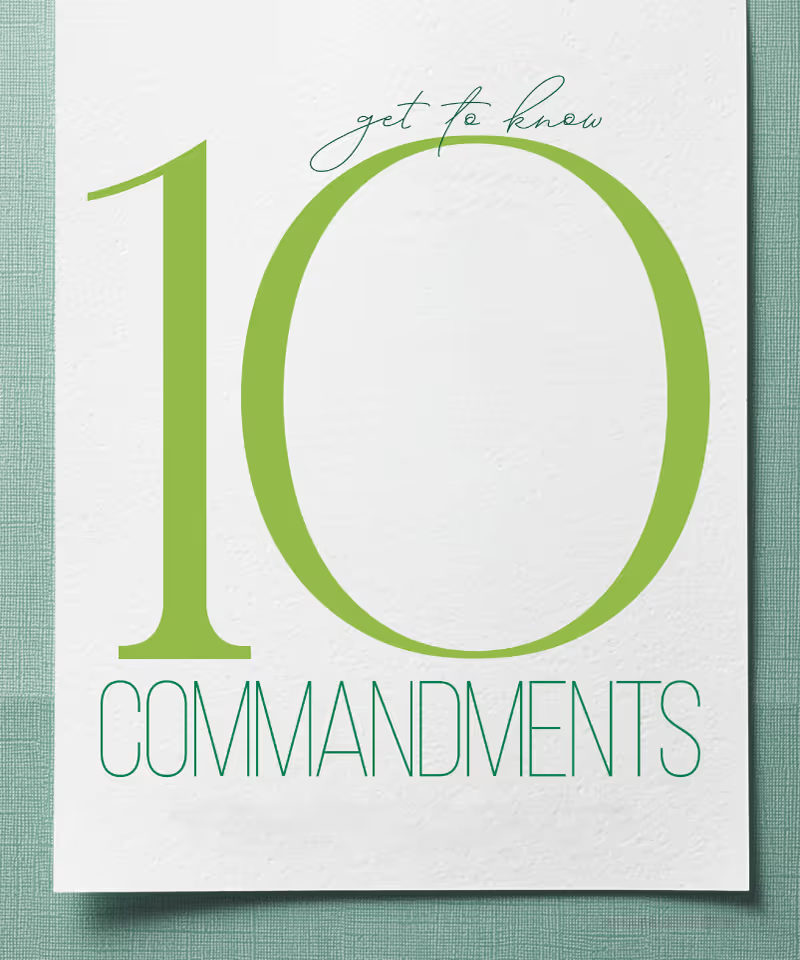
A piece of paper with text that reads “get to know the 10 commandments.”

Get to Know the 10 Commandments

The Ten Commandments are as relevant today as they were to Moses and the Israelites when God inscribed these enduring laws into stone.
The Commandments in the Old Testament

What are the Ten Commandments?

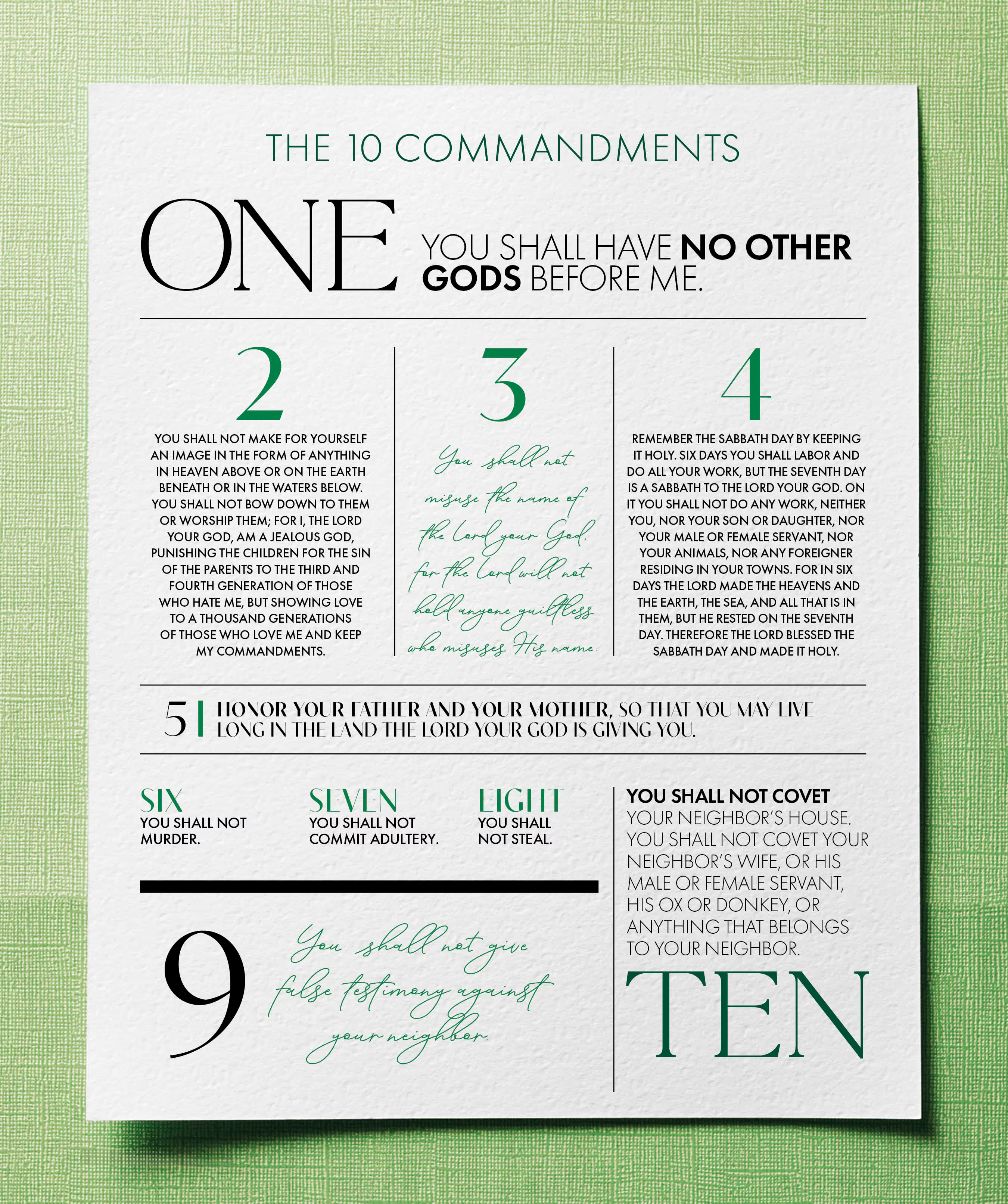
You’ll find the story of God’s Ten Commandments in the second and fifth books of the Old Testament (see Exodus 20:1–17 and Deuteronomy 5:4–20). Through Moses, God gave the people of Israel “ten words” or “ten sayings” in Biblical Hebrew to guide their interactions with God and each other. The Septuagint, a Greek version of the Old Testament, used the term Decalogue for these sayings. Later, these sayings became known to us as the Ten Commandments.

Why Did God Give Ten Commandments?

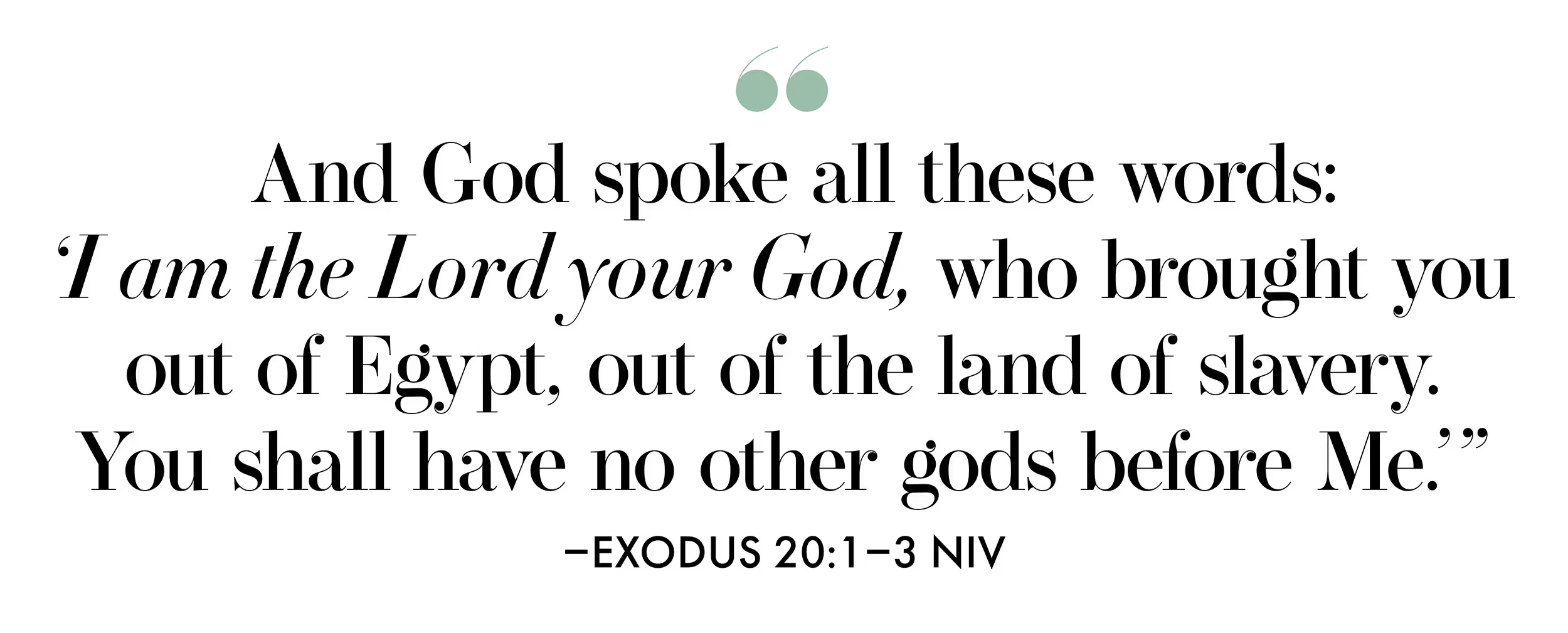
As the Book of Exodus opens, the Israelites have been slaves of the Egyptians for 400 years. Not only were they oppressed, they were continually exposed to the Egyptian gods and goddesses. But the Israelites’ God—the God of their forefather Abraham—was more powerful than these false gods. As a sign to the world, God sent plagues on Egypt, forcing Pharaoh to free His people.

As Moses led the people toward the land promised to them by God, He stopped them after three months and called Moses to the top of Mount Sinai. There, the Lord gave Moses the Ten Commandments, which are a distillation of the Law that God would give the Israelites. These ten commands taught the people of Israel how to honor and acknowledge their God. Each person was called to keep the entire Law all of his or her life to be able to stand before God. Since no one could lead a sinless life, only Jesus—who is fully God and fully man—could later fulfill the Law by shedding His blood on the Cross atoning for our sins.  

Why are the Israelites special to God?

As the descendants of Abraham, the Israelites were people specifically chosen by God for a special relationship. Abraham’s heirs grew into a nation called Israel, which served as an example to all people of God’s love, faithfulness, protection, favor and blessing for those who believe in Him and obey Him. Their story is told in the section of the Bible called the Old Testament, which ends about 400 years before the birth of Christ. The New Testament tells the story of Jesus.  
Why Ten Commandments?

The number 10 is seen as a complete number that helps organize all the other numbers. Some suggest that 10 represents God’s divine order. Others point to their fingers and toes. The number of commandments represents God’s order and man’s responsibility. The first four commandments relate to our relationship with God. The fifth commandment is a transition verse having elements that fit within both groups. The remaining five commandments relate to relationships with other people.

When were the Ten Commandments given?

No exact date is known. Some estimate the Ten Commandments were given somewhere around 1440 BC, based on dating derived from 1 Kings 6:1. Others suggest that the commandments were received closer to 1275 BC. Some scholars speculate that the Ten Commandments were given on the same day of the year that the Holy Spirit was given to the early Church on the day of Pentecost (Acts 2) after Christ’s ascension.

How Were The Commandments Given?

The Bible records how God gave these instructions to Moses and the people in Exodus chapters 19, 20 and 24. God verbally proclaimed the Ten Commandments to the people of Israel. God Himself inscribed these commandments on two stone tablets with His finger (Exodus 20, Deuteronomy 5:22 and Exodus 31:18). Through Moses, God also gave hundreds of other instructions, which cover civil and religious laws. Most are found in the first five books of the Old Testament and, collectively, they are called the Law.

Note: All Bible quotes are from the New International Version
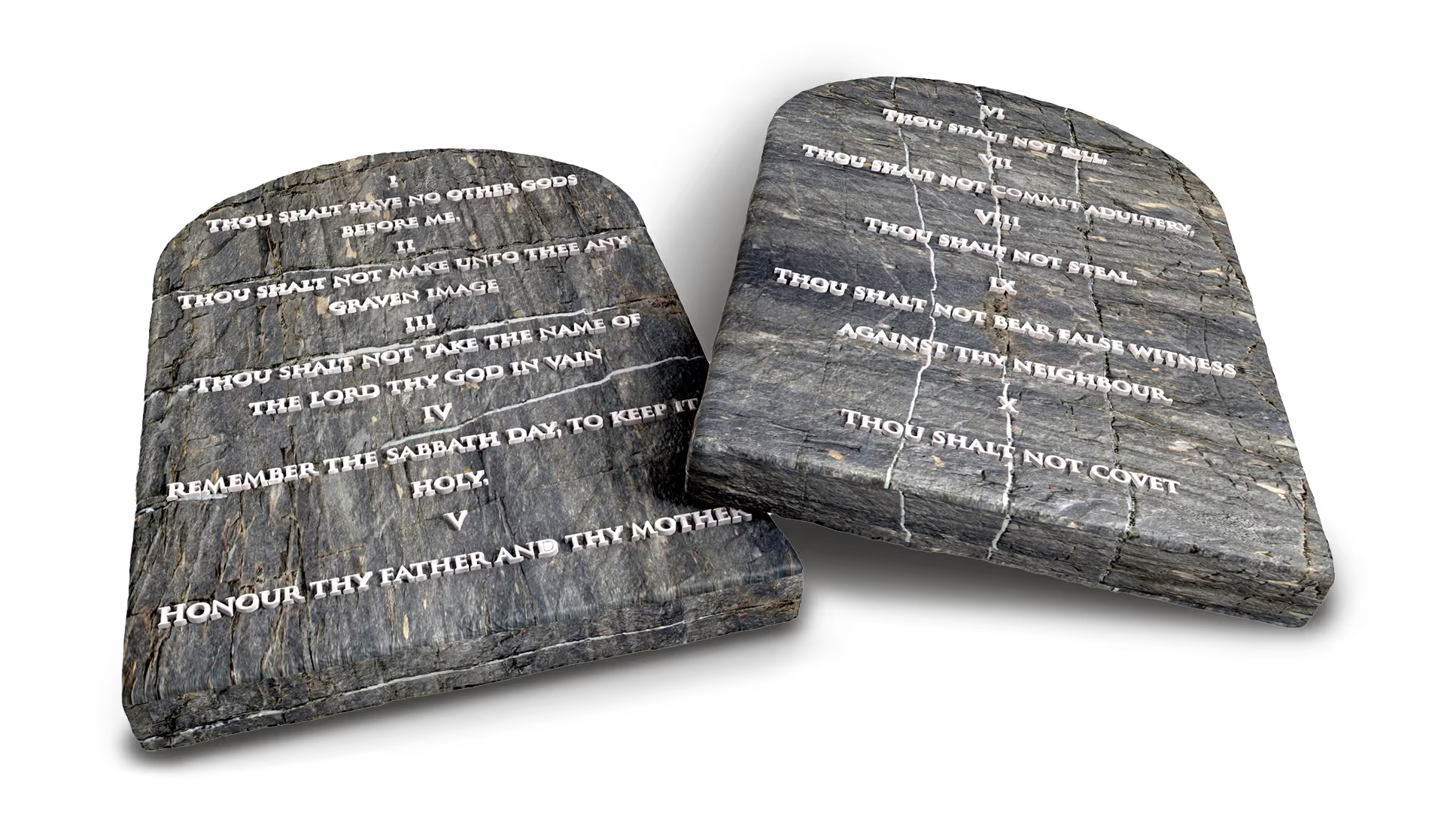
Stone Tablets, Really?

Yes, but these tablets are different than those we typically see in film. Lawson Stone, professor of Old Testament at Asbury Theological Seminary in Kentucky, provides an interesting description of the tablets in his article “Turning the Tables—The ABCs of the Ten Commandments.” Here are Lawson’s main points:

  • The tablets were not huge. They were probably a little smaller than a piece of notebook paper.
  • The commandments were written on both sides of each stone.
  • The two tablets were really two copies. Each tablet contains all of the 10 words or sayings. Because the commandments were actually a legal treaty, or contract, a copy was made for each party—God and the Israelites. This was the Mideastern tradition at the time for a treaty between a king and his vassal (subordinate). The king kept one copy and the vassal kept the other. Since God designated the Tabernacle (a portable temple made by the Israelites) as His dwelling, both copies of the Ten Commandments were stored there. The tablets were inscribed with early Hebrew script and resembled something closer to those Charlton Heston hoisted in the 1956 film The Ten Commandments than to modern re-creations in films and images.

More

Bible

Stories

Read more
Q & A About the Commandments

It’s easy to become confused when discussing the Ten Commandments. We must look at the entire Bible, not just part of the Scriptures. Asking the right questions guides how we should respond to the Ten Commandments.

Q: Do I need to keep the Ten Commandments?

Yes. Keeping the Ten Commandments is a demonstration of your love for God. It is not the basis for your salvation. It demonstrates your acknowledgment that God is ruler of all. We submit to His kingship by following His rules. His rules are based on love, justice, mercy and righteousness. Jesus encourages others to keep the commandments. He said that He came to fulfill the commandments, not to do away with them. Will we fail at times? Yes, that is why confessing our sins daily refreshes us with God’s mercy (1 John 1:9).

Q: Is my salvation dependent on my keeping the 10 Commandments?

No. Salvation comes through faith. God declared Abraham as righteous based on his faith (Romans 4:3, Galatians 3:6). Abraham lived before God gave the Law, and Jesus has already fulfilled the Law on our behalf.

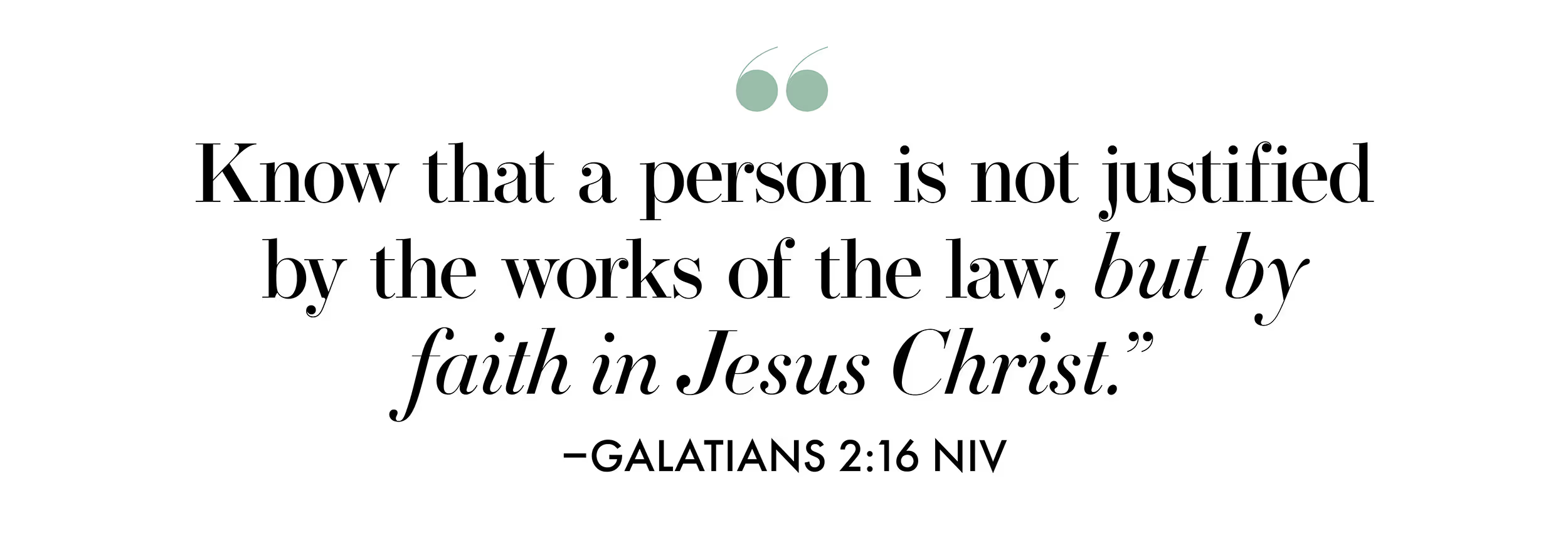
God did not change His manner of dealing with humanity. Jesus said that it is God’s will that everyone who looks to the Son will have eternal life (John 6:40). Paul declares that salvation could never come through the Law. God only honors faith in Himself (Jesus Christ) as the basis for righteousness and salvation (Galatians 2:16, 3:11). We are saved by grace, not works, even the keeping of the Ten Commandments (Ephesians 2:8).

Q: Is salvation granted through grace?

Yes. Most seem to hope that God grades on a curve. Many think they just need to do more good work than bad to get into heaven. But keeping the Ten Commandments does not make anyone an “A” student in God’s eyes. We all fail when evaluated on our own performance.

Jesus proclaimed, “ … unless your righteousness surpasses that of the Pharisees you will certainly not enter the kingdom of heaven” (Matthew 5:20). Jesus goes on in the next verses to expand on the Ten Commandments, saying inward thoughts like anger and lust demonstrate the condition of the heart.

God looks at the heart (1 Samuel 16:7, 1 Chronicles 28:9, Romans 5:5, 8:27). Nothing is hidden from God. But God in His mercy gives us a perfect score because Jesus passed the test for us. Undeserved, Christ’s righteousness is credited to us as our righteousness (Romans 4:22–24, 10:3–4). This is the wonder of grace.

Q: Are the Ten Commandments etched into our hearts?

Yes. God promises in Hebrews 10:15–17 to etch His laws into our hearts through the Holy Spirit. Jesus tells us, “for He (the Holy Spirit) lives with you and will be in you” (John 14:17).  Christ’s love flows through the Holy Spirit as we walk with Him. It is through Christ’s perfect love that we can love God and love our neighbors as ourselves, fulfilling the Ten Commandments and more. And when we fail there is forgiveness.

Q: How do we keep the Ten Commandments?

Jesus said, “I am the Vine, you are the branches. If you remain in Me and I in you, you will bear much fruit, apart from Me you can do nothing” (John 15:5).

The Commandments in the new Testament

Jesus and the Ten Commandments

Jesus said He came to fulfill the Law (Matthew 5:17). This meant He had to keep and never break any of the commandments. No one has ever achieved this state of perfection. Only Jesus, who was fully God and fully Man, could lead a sinless life.

The Pharisees quizzed Jesus, asking which commandment was the greatest. “Jesus replied, ‘Love the Lord your God with all your heart and with all your soul and with all your mind.’ This is the first and greatest commandment. And the second is like it: ‘Love your neighbor as yourself.’ All of the Law and Prophets hang on these two commandments” (Matthew 22:37–40).

The Ten Commandments point us to Jesus Christ. Love for God and love for people are at the heart of who Jesus is. He fulfilled all through His love. God is love, therefore Jesus is love (1 John 4:16, Philippians 2:6). Jesus said, “Greater love has no one than this, than to lay down one’s life for his friends” (John 15:13). This greater love is the basis of the new relationship Jesus established between God and people.

The Apostles, the Law and the Ten Commandments

The Apostle Paul explains in Galatians 3 that the Law was given to guard mankind until God sent Jesus Christ. The Law was meant to lead us to Christ (Galatians 3:24). Old Testament laws were given for specific purposes in three areas: moral behavior (the Ten Commandments), civil (government) behavior and ceremonial (worship) behavior. The New Testament confirms that the need for civil and ceremonial laws had ended. For example, Peter and Paul address these practices (Acts 11, Colossians 2:13–23, Galatians 5:6, Hebrews 7:18, 26–28). The apostles kept the moral law (the Ten Commandments) by following Jesus’ example of love for one another and for God.

More

Faith

Stories

Read more

Related Categories