
Your cart

Product Title
Option 1 / Option 2 / Option 3
Product Note
Subscription Plan Info
Product Discount (-$0)
COUPON1 (-$0)
$0
$0
-
+
Your cart is currently empty.
Enter discount code
Thank you! Your submission has been received!
Oops! Something went wrong while submitting the form.
Coupon1
Coupon2
Cart note
Subtotal
$0
COUPON2
-$0
Order Discount
-$0
Cart Total
$0

Grow During Lent

Many people are puzzled when they first hear someone say they are giving up something for Lent. It raises questions. Why? Should I? Lent can help you grow in faith as you learn what you have gained and who you truly are. Dig into this old tradition for new ideas for growth.

Grow During Lent

Many people are puzzled when they first hear someone say they are giving up something for Lent. It raises questions. Why? Should I? Lent can help you grow in faith as you learn what you have gained and who you truly are. Dig into this old tradition for new ideas for growth.
What is Lent?

Lent is the 40-day period before Easter. It is the time set aside by the faithful as a time of reflection, penitence and giving. Lent starts on Ash Wednesday and ends with Easter. Actually, it is a 46-day period, because Sundays are not counted, leaving 40 days for Lent.

Lent encompasses some of the major events described in the Gospels, such as Jesus’ triumphal entry into Jerusalem (celebrated on Palm Sunday) and Jesus’ Crucifixion, culminating in His Resurrection. This period is punctuated by the historic and spiritual events that separate Jesus from all others, marking Him as the only way to God. As believers, we reflect on these truths during Lent.

How Did Lent Start? 

The term or practice of Lent is not found in the Bible. However, Lent does have a strong connection to something very biblical—baptism.

Believers in the early church encountered social pressure. They could be ostracized by others in their communities, cut off from relationships, accused of vile practices, jailed, persecuted or even killed. Individuals who considered committing their lives to Jesus were encouraged to count the cost. They would undergo a period of study, reflection and sober decision before they would be baptized on Easter. New believers joined in prayer, fasting, study and community as they determined if they would be baptized and bear the cost of their allegiance to Jesus.

Existing believers used this time to support new believers and renew their commitment and faith in Christ. These widespread practices among the faithful were already seen as traditions as reported by Irenaeus of Lyons, an early church leader in the 2nd century. The practice varied in length; some might reflect for a few days while others might do a 40-hour fast.

The practice of Lent became more formalized over the centuries. Pope Gregory the Great (540 to 604 A.D.) formalized Lent to begin on Ash Wednesday and end at Easter. As the Christian faith grew in acceptance, the rigor of Lent became more relaxed.

Why Observe Lent? 

Just before we come to faith in Jesus, we realize in desperation that we are out of choices. We cannot save ourselves. Faith marked by baptism is where we say urgently and desperately “save me!”

Lent is linked to baptism. Each Lent provides us another chance to grasp that our salvation comes by Christ alone, doing what we cannot do for ourselves. He meets our desperation with an eternal solution. We respond in joy, gratitude and thanksgiving.

But each Lent takes us further. As we fast and pray, we grow in our hunger for God. First, we reluctantly give up. Then we willingly give up food, time or activities so we can grasp who God is. As we mature, we urgently seek God. We learn that God through Jesus provides more than salvation: life itself. Our life, our identity, our purpose, our joy all flow from knowing God and ourselves in light of him. Like plants need water, we need God to exist. Lent provides us opportunities to soak up the life-giving water provided by the Holy Spirit. We grow roots and blossom in response to our God, the life giver.

What We Gain as We Observe Lent

Romance involves focused attention. We observe anniversaries to remind us of commitments. Our love relationship with Jesus also requires focused attention. Lent is the period of the year when Jesus’ trial, Crucifixion and Resurrection occurred. Lent reminds us of those events and draws us closer to Jesus in several ways. Observing Lent:

Creates Awareness: Lent provides a structure for us to slow down and pay attention. This awareness produces other benefits.

Heightens Our Gratitude and Appreciation: We reflect on the horrendous suffering Jesus endured for us. The movie The Passion of the Christ brutally portrays the Crucifixion scenes, yet no visual or written account begins to capture the actual brutality and malice by humans and demonic powers experienced by Jesus on physical, emotional and spiritual levels. We are grateful Jesus took our place.

Increases Our Humility and Love: As we realize the price Jesus paid, we can only respond in love toward Him. As we come to accept that our actions and sins led to Jesus taking our place, we can only be humbled by his sacrifice.

Identifies Priorities: Busy, busy, busy. Church? Family gathering? Ham or turkey? New dresses? Easter candy? Urgent matters clutter our minds and days. Lent allows us to slow down and focus on the important. Where do we stand with God? Do I love God with all my heart? Where do those I love stand with God? How do I act as God’s ambassador to my children, spouse, parents, siblings, friends, coworkers or neighbors? Lent gives us time to ask what is important and time to pursue it.

Breaks Control: Ancient practices of prayer, fasting and penitence reveal what controls us. We give the Holy Spirit quiet moments to teach and confront us. These times of reflection help us learn if guilt, approval from others, physical appetites, love of money, power, fear or abuse controls us. We can surrender to the Holy Spirit’s leadership, break what controls us and gain a right balance in all areas of our lives.

Deepens our relationship with Christ: We learn to trust God through the insights gained during Lent. We no longer need to create pretenses or facades before God. We become honest and vulnerable before the One Who Fully Knows Us. We can embrace God as a child not holding back, a child who knows acceptance.

Builds Christian Community: You are not alone. “All have sinned and fall short of the glory of God” Romans 3:23. The pretenders, those who have it all together and those who are broken, all need God’s grace. Prayer, study and worship through Lent build awareness that we are part of a heavenly family.

Gain Focus Rather Than Give Up

Adding one more task to the to-do list can seem overwhelming. Change your perspective: Lent is about awareness and focus. Giving up something for Lent makes you focus on something better. We focus on our health by eating better. We give up some foods for better ones. We focus on our fitness. We become more active and give up extended sedentary times. Lent allows us to focus on our relationship with Jesus. We do this by giving up other things. This act allows us to spend time in actions that help us know Him. We gain much compared to the minor times we give up. Fellow believers have focused on four Lenten activities over the centuries:

Prayer

We communicate with a friend or spouse to stay connected. Our relationship with Christ also requires communication. Prayer is simple talking, or communicating with God. Paul tells us to “pray without ceasing” (1 Thessalonians 5:17). We can communicate with Jesus when we walk or breathe, doing our daily activities. He is always present, always with you (Matthew 28:20). We need to set regular undisturbed times. Put away the phone. Enjoy the silence or play music. Light a candle. Find a quiet spot. Most importantly, allow yourself enough time. Watch the movie War Room for insights into prayer.

Penitence and Confession

Lent provides a time of reflection and contemplation of who we are and who God is. As we know Jesus, God the Father and Holy Spirit more intimately, we come to realize our sinfulness. We naturally begin to confess the thoughts, words and deeds that are unworthy of a child of the King. We ask for God’s forgiveness. We ask the Holy Spirit to help us mirror Christ’s nature in our interactions with God and others through our thoughts, attitudes and actions.

Giving

Giving changes our perspective on God, ourselves and others.


Ourselves: Giving breaks our sense of self-reliance and self-sufficiency. Love of money can control us. We might say “I’ve got money. Why do I need God?” This springs from an unspoken sense of being safe because of wealth, not because we have God as our Lord. Giving frees our hearts to trust God and demonstrate it by our actions.


God: Our talents, skills, intelligence, health and very footsteps are given by God. He is the Source of All. He is sovereign over all. We are only stewards or caretakers. God will continue to provide (Luke 12:22–34).


Others: Giving to other believers builds community among us. We become God’s instruments of grace to others.

Fasting

Lent historically included fasting, or giving up something. True fasting is not about showing super discipline. Fasting reflects our true hunger for God. We remove activities or clutter to focus on God. It is our cry that we need and want to be with God. We desperately seek substance only found in God. We gain insights:

• Fasting helps us break physical appetites that control us. Go without a latte, diet soda or sugary treat to discover what controls you.

• Fasting reminds us of our humanity. We need food, sleep and other basic needs. All these needs point out our limitations and our humanity.

• Fasting shows us God’s provision and Providence. Fasting points us back to the Source of All. God provides us a natural world with order that yields what we need.

More

Easter

Stories

Read more
Lenten Reflections

Lent provides an opportunity to grasp the reality of Jesus’ death and Resurrection and their impact on each of us. When Jesus died on the cross He changed our relationship with God. We gained direct access to God. The torn Temple curtain (Matthew 27:51, Ephesians 2:18 and 3:11–12, Hebrews 4:14–16) symbolizes that dramatic change. Jesus rose from the grave on Easter Sunday. He changed our relationship with life and death. He became our source of life, and death no longer has a claim on us (1 Cor. 15). Reflect on the historic and spiritual events that took place 2,000 years ago as you affirm your trust in Jesus as the only way to God and eternal life. Read these selected passages during this Lenten season:

Ash Wednesday

Our humanity. (Genesis 3:19, 1 Cor. 15:47–49)

Readings for Week 1

Jesus rose from the dead and appeared to many. (Luke 24, John 21, Acts 2:32–36, Romans 8:34, 1 Cor. 15:4)  

Jesus is God. (John 1, Col. 1:15–19, Phil. 2, Heb. 1.)

Jesus is the way, the truth, the life. Good Shepherd. (John 14:1, 6, John 10:1)

Readings for Week 2

We confess that we have rebelled and sinned against God. (Romans 3:23, Romans 5, 1 John 1:7–10)

We were slaves to sin. (Romans 6, Titus 3:3, 1 John 1:8)  

We cannot help ourselves. We ask for God’s forgiveness, mercy and grace. (Col. 13 and 14, Col. 1:21–23, Titus 3:3–7, 1 Cor. 1:29–31, Romans 7:13–25)  

Free in Christ (Romans 6:22, Gal. 4:4–7, 5:1, 2 Cor. 3:17, Gal. 5:13, 1 Peter 2:16, 1 John 1:9)

God provides a way to reconcile us to Himself through Jesus even while we were His enemies. (1 Peter 2:24, Heb. 2:5–18, Romans 5:10, 2 Cor. 5:11–21)

Readings for Week 3

Jesus died taking the punishment for our sins at the Crucifixion, because we broke God’s law. (2 Cor. 5:21, 1 Cor. 5:7, 1 Peter 1:18–19, Matthew 27, Heb. 10 )

He is buried. Our old sinful nature dies and is buried with Christ. Baptism symbolizes this death as we go beneath the water. (Phil. 3:8–11, 1 Peter 3:18, Romans 6, Col. 2:12)

Readings for Week 4

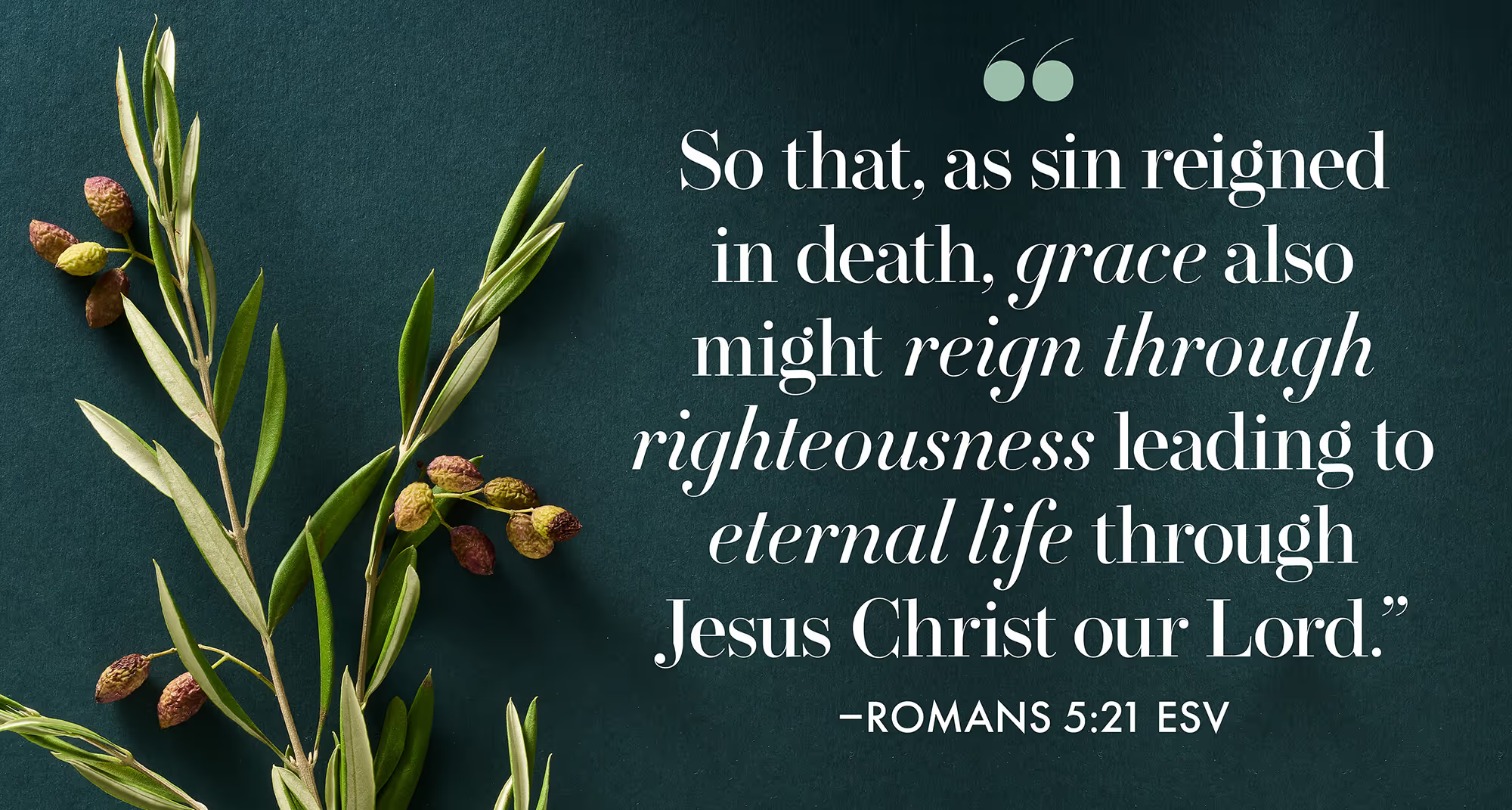
Jesus rose from the grave. Death no longer reigns. Jesus conquered death and frees us. (John 11:25, John 20, Matthew 28, Romans 5:21, 1 Cor. 15, 2 Tim. 1:10)

We are raised with Christ. Baptism symbolizes our resurrection with Jesus. We are born again. (Romans 6:3–5, John 3, 2 Cor. 4:7–18, Col. 2:1–14, Eph. 2:6, Col. 3:1, 1 Peter 1:3 and 23)

God adopts us as his child. He knows us by name. (John 1:12, Romans 8:16–17 and 21, Eph. 5:1, Phil. 2:15, 1 John 2:28, 3:1 and 3:10, 1 Cor. 8:3, Gal. 4:9)

We receive a heart that desires God. (Ezekiel 11:17–20)

Inheritors of eternal life. (John 3:16, 3:36, 5:24, 6:40, 10:28, Romans 2:7 )

Readings for Week 5

United with Christ. Vine and branches. (Romans 6:5, John 15, Romans 5:21)

Yoked with Christ. He carries the load. (1 Tim. 6:11–16, Matthew 11:25–30)

Readings for Week 6

God places his Holy Spirit in us as a seal of promise that we have eternal life. (Eph. 1:13, Gal. 5:5, Ezekiel 36:24–27, Gal. 6:8, 2 Tim. 1:14, Titus 3:4–7, 1 John 5, Heb. 10:15–16)

The Holy Spirit renews our minds and hearts to follow after God. (Romans 12:2, Eph. 4:23, Phil. 4:8)

Temples of the Holy Spirit. ( 1 Cor. 6:19–20, Eph. 1:13, 4:30, John 14:15–31, John 16:5–15, Romans 5:5)

Readings for Easter

God’s promises. (John 3:16–21, 1 John 2: 1–3 and 25)

The Resurrection and Jesus with disciples. (John 20, Matthew 28, Mark 16, Luke 24, Acts 1:1–12)

More

Faith

Stories

Read more

Related Categories