Your cart

Product Title
Option 1 / Option 2 / Option 3
Subscription Plan Info
Product Discount (-$0)
COUPON1 (-$0)
$0
$0
-
+
Your cart is empty.
Enter discount code
Thank you! Your submission has been received!
Oops! Something went wrong while submitting the form.
Coupon1
Coupon2
Cart note
Subtotal
$0
COUPON2
-$0
Order Discount
-$0
Cart Total
$0

Pet Project

God created animals—dogs, cats, goldfish, turtles and even lizards—intentionally for His purposes. Animals, including our pets, demonstrate God’s creativity and teach important lessons about love and companionship.

Pet Project

God created animals—dogs, cats, goldfish, turtles and even lizards—intentionally for His purposes. Animals, including our pets, demonstrate God’s creativity and teach important lessons about love and companionship.
Why God Created Animals

Owning a pet is similar to having a fun, energetic friend who loves you so much that when you return home, he or she joyfully yells, “It’s YOU! You came back! I am so glad you are here.” But the crazy little friend that greets you has fur and four legs and likes to occasionally eat things out of the trash can. Regardless, he or she is a loving companion and joins all of creation in declaring the glory of God.

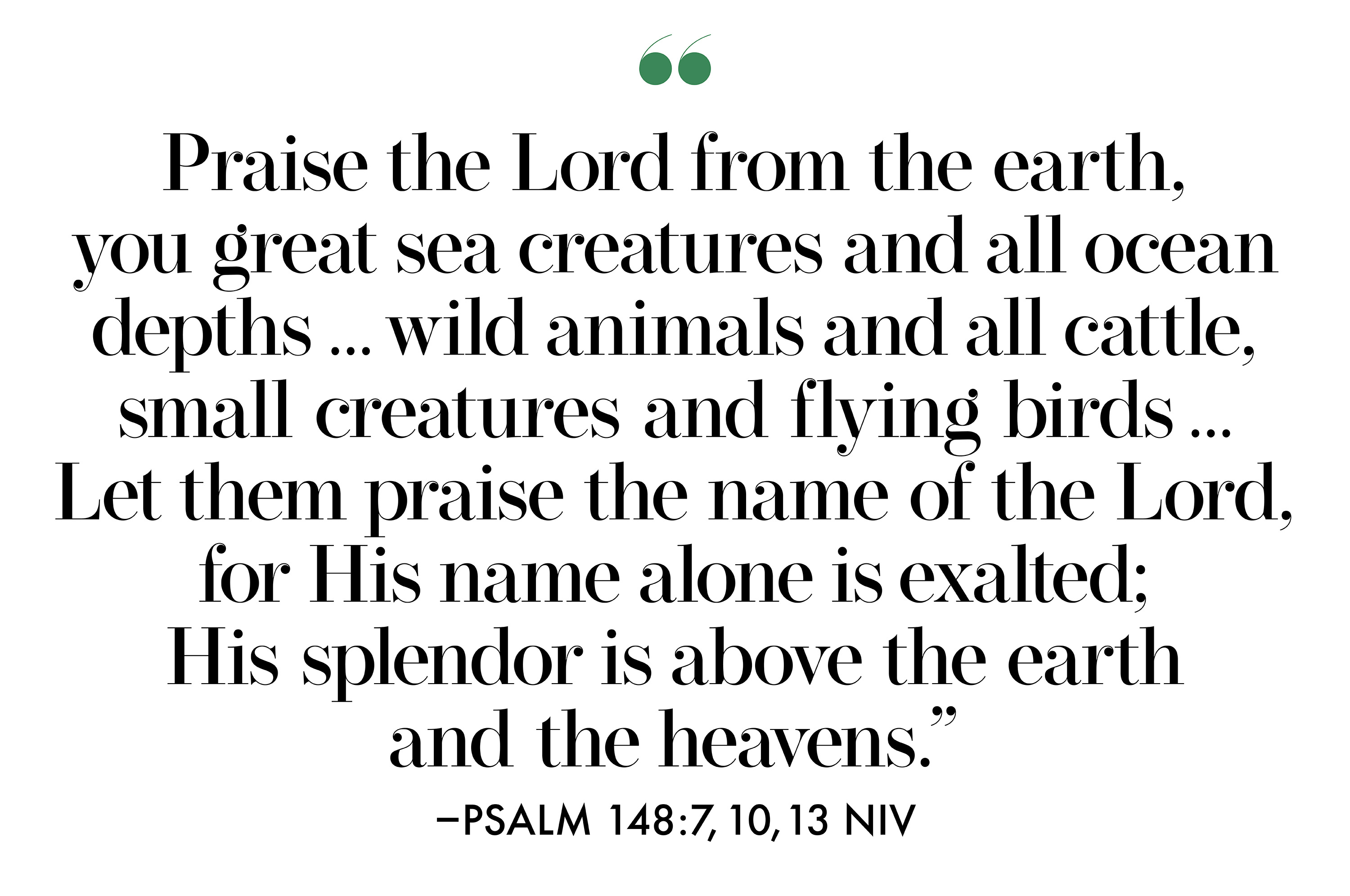
Psalm 150:6 says, “Let everything that has breath praise the Lord!” (ESV). The Lord also says through the psalmist that all creation praises Him: the sun and moon, sea creatures, hail, snow and mist, mountains and hills, fruit trees and cedars, beasts and all livestock, creeping things and flying birds (Psalm 148). It’s hard to believe a little 7-pound dog or a fluffy 10-pound cat can sing God’s praise, but Scripture tells us the Lord created animals for His glory.

All of God’s creation was made for the most glorious, most purposeful reason: to praise God throughout all the earth. Animals are the most relatable and most enjoyable creatures to observe in God’s creation. Livestock provide food and nourishment for us, exuberant peacocks and zebras show off their beauty, and the beasts of the earth exhibit their majesty and strength. Each animal puts on a beautiful demonstration of God’s detailed creation.

In Genesis 1:28, Scripture tells us humans are to have dominion over every living thing. The Lord gives us the responsibility to look after and care for His creations on earth. One doesn’t need to look far to know that God expects us to provide this care with loving authority. Proverbs 12:10 says, “Whoever is righteous has regard for the life of his beast, but the mercy of the wicked is cruel” (ESV).

Our feline and canine companions have come a long way from their fierce and wild ancestors, yet all are part of God’s creation and worthy of kindness and care. Creatures of all shapes and sizes add joy and excitement, compassion and affection, and sometimes hilarity to our everyday lives. We can honor God by taking care of all our pets with plenty of love and kindness.


Benefits of Pet Ownership

Responsibility: Pets rely on their humans for food, water, shelter and affection. For these reasons, parents introduce animals into a home to teach kids responsibility, maturity and follow-through.

Therapy: Animals have a knack for helping us through difficult times. Professionals use many different types of animals in therapy sessions to relieve anxiety, stress and post-traumatic stress disorder (PTSD) in children and adults. Animals provide unconditional support, teach trust and help build empathy and kindness.  

Work: Some dogs are bred to work. They can be used for protecting livestock, herding, sniffing out drugs or explosives, hunting and guarding your home. Other domesticated animals, such as horses, can be used for transportation and agricultural work.

Companionship: Loneliness affects everyone at some point, and pets provide companionship. A pet gives you the opportunity to take care of a creature other than yourself. It also offers you a way to meet new people—at dog parks, on walks outside, at the pet store or at the veterinarian. For the elderly, a pet stimulates cognitive function and offers an opportunity to exercise. Pets and social support animals can boost moods and reduce loneliness.

Health: Believe it or not, pets help decrease levels of cortisol (a stress-related hormone) and lower blood pressure. Pets improve a human’s cardiovascular health, too. An American Heart Association study discovered pet owners who regularly walk their dogs get up to 30 minutes more exercise per day than nonwalkers. Recent medical studies suggest that kids who grow up in a home with furry pets experience less risk of allergies and asthma.

More

Home

Stories

Read more
Tips to Select the Best Pet for Your Lifestyle

Each furry, feathered or scaly friend is unique in both personality and needs. Before you get a pet, examine your lifestyle so both you and the animal will be comfortable and happy. When considering a new pet, think about your living conditions, yard size and how much time you can devote to a pet. Take into consideration who can provide backup care, the cost of pet ownership and the pet energy level you can realistically handle.

When shopping for a pet, research organizations or breeders to ensure they use ethical breeding practices. The American Kennel Club website offers a list of reputable dog breeders across the country. Check out local rescue organizations that adopt out pets; they'll let you interact with a pet before you decide to adopt. Or offer to foster a pet that has not yet found its forever home. If you have children or other pets in the home, ask for an animal that does well with kids
and other animals.

When choosing a pet, take some time to familiarize yourself with different breed temperaments and qualities. Animals all have their unique abilities and personalities, and you need to know what to expect and how to train your pet. Lap dogs, such as Shih Tzu and Chihuahuas, are great companion pets for single or elderly individuals. Hamsters, betta fish, guinea pigs and hermit crabs are low-maintenance and perfect for those with a busy schedule. If you lead an active lifestyle, check out Brittany spaniels, Doberman pinschers or vizslas—they can keep up with your outdoor and exercise hobbies.

If it’s a family dog you seek, consider a Labrador or golden retriever, beagle or collie. Siamese, Cornish Rex or Ragdoll cats tend to be affectionate, loyal and suitable for families.

Although pet ownership is a commitment both financially and emotionally, your new companion will love you unconditionally and bring fun and joy into your life.

Responsible Pet Ownership Checklist
Follow the rules.

See if your neighborhood, apartment building or homeowners association sets specific rules about pets. Before purchasing or adopting an animal, familiarize yourself with state, county or city pet ordinances.

Keep them healthy.

Establish regular care with a veterinarian early on. Provide good nutrition for your pet by supplying it with quality food. Make sure your pet has adequate exercise and shelter. Avoid giving it dangerous toys, like string. Make sure to keep the animal properly groomed.

Keep them active.

How often and how long a pet needs exercise depends on a pet’s breed, age and health status. Do research about your pet’s needs for mental stimulation and activity and prepare appropriate spaces for exercise.

Take the time to train.

Obedience training instills manners and keeps both animals and the people around them safe. Properly socialize your pet and make sure to supervise the animal when young children are around.

Create a strong bond.

Spend time playing and exercising with your pet. Learn to detect signs of stress or annoyance in your pet and how to de-escalate the animal when needed. Many animals thrive on routines, so provide a consistent schedule for your pet.

Plan for when you’re away.

Research pet care options, such as pet hotels, kennels or pet sitters, for when you will be away on a long trip. On workdays, provide your pet with enough food, water and toys to keep them occupied until you get home. If a pet requires a break outside, plan for it in your work schedule.

More

Family

Stories

Read more

Related Categories