Your cart

Product Title
Option 1 / Option 2 / Option 3
Subscription Plan Info
Product Discount (-$0)
COUPON1 (-$0)
$0
$0
-
+
Your cart is empty.
Enter discount code
Thank you! Your submission has been received!
Oops! Something went wrong while submitting the form.
Coupon1
Coupon2
Cart note
Subtotal
$0
COUPON2
-$0
Order Discount
-$0
Cart Total
$0

The Power of the Press

A crisp, well-pressed natural-fiber shirt elevates your appearance, whether you’re heading to a meeting, interview or church. Knowing how to iron a cotton shirt opens up opportunities to shed athleisure clothing for more polished and professional options. Ironing gives a shirt a more tailored and flattering fit, particularly around the collar and cuffs, helping you feel comfortable and confident. Learning to iron saves both time and money, eliminating costly laundry services. Ironing is a practical life skill that ensures you and your family always look and feel your best.
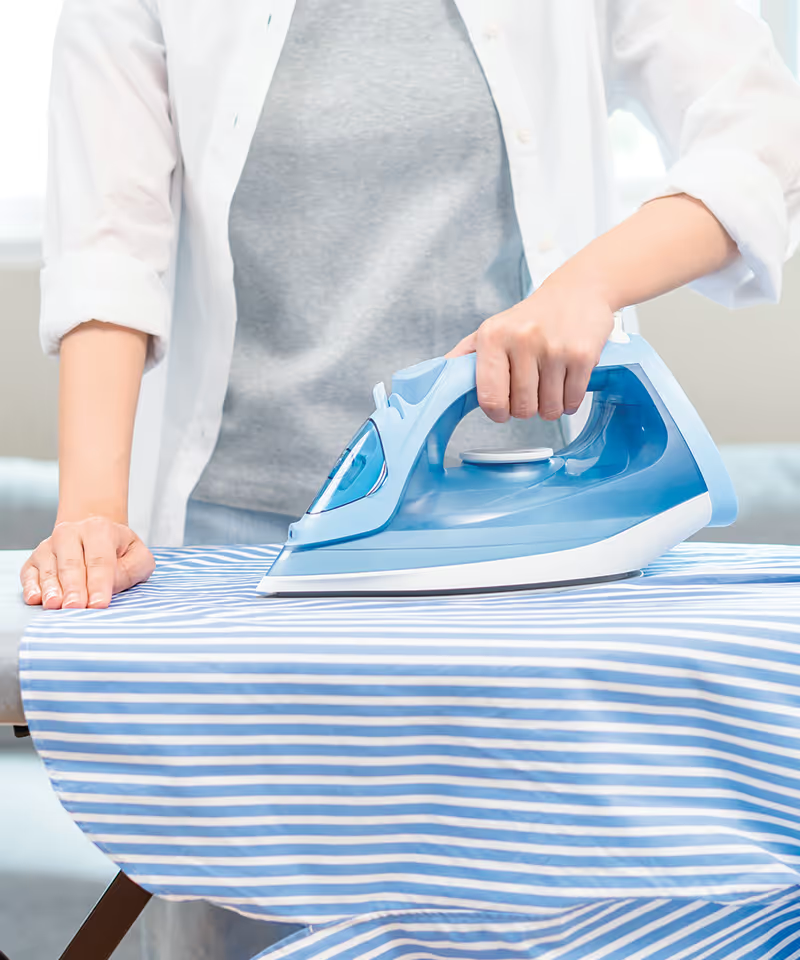
A person ironing a white and blue striped shirt on an ironing board.

The Power of the Press

A crisp, well-pressed natural-fiber shirt elevates your appearance, whether you’re heading to a meeting, interview or church. Knowing how to iron a cotton shirt opens up opportunities to shed athleisure clothing for more polished and professional options. Ironing gives a shirt a more tailored and flattering fit, particularly around the collar and cuffs, helping you feel comfortable and confident. Learning to iron saves both time and money, eliminating costly laundry services. Ironing is a practical life skill that ensures you and your family always look and feel your best.
Why Iron?

Learning to iron a shirt expands your clothing options, allowing you to choose natural fibers, which often wrinkle after washing. A simple skill, ironing enhances your clothing’s appearance and boosts your professionalism and confidence. Ironing not only creates a polished look, but it also improves how you’re perceived and helps preserve a shirt’s fabric.

Why Natural Fibers? Wearing nonsynthetic clothing made from natural fibers like cotton, linen and wool is healthier for your skin. Synthetic fabrics, such as polyester and nylon, are made from petroleum-based materials that trap sweat and promote bacterial growth, which can lead to skin conditions like rashes or fungal infections. In contrast, breathable natural fibers allow air to circulate and help regulate body temperature by wicking moisture away from the skin. Hypoallergenic and soft cotton absorbs moisture, keeping your skin dry and comfortable. It’s naturally breathable, so it prevents heat rash and sweat buildup, and it typically doesn’t undergo the harmful chemical treatments of synthetic fabrics, reducing your exposure to allergens. According to the American Academy of Dermatology, natural fabrics like cotton provide healthier clothing choices for those with sensitive skin because they are less likely to cause skin irritations (American Academy of Dermatology, 2020). However, cotton does wrinkle more easily than synthetics, so it requires a bit more attention to maintain its crisp look. Learning to properly iron is key to keeping your cotton shirts looking sharp.

What You Need

Steam Iron

Steam irons are ideal for eliminating wrinkles effectively. Steam helps relax fibers, making it easier to smooth out wrinkles. Look for an iron with variable temperature settings to suit different fabrics and a steam burst feature for stubborn wrinkles.

Ironing Board

A sturdy, adjustable ironing board with a heat-resistant cover provides a stable platform for pressing your shirts.

Spray Bottle

Water in a fine-mist spray bottle helps moisten fabric, particularly for stubborn wrinkles. Even when using a steam iron, some professionals spray an entire garment prior to pressing.

Pressing Cloth

(optional)  A pressing cloth prevents direct contact between the iron and a delicate fabric, reducing the risk of scorch marks or shine. It's especially useful when ironing fabrics like silk, wool and cotton blends. Make sure the pressing cloth is thin enough to allow steam to pass through.

Spray Starch

(optional)  Starch adds a slight stiffness to your shirt, creating a smooth finish. Ideal for business attire and dress shirts, it should be used sparingly to avoid residue buildup on fabric.

Hanger

A good-quality hanger helps maintain an ironed shirt’s shape and crispness. Durable wooden hangers prevent shoulder bumps.

10 Steps to Ironing a Cotton Dress Shirt


Here’s a step-by-step guide to help you achieve a well-pressed, polished look.

1. Prep the shirt: Remove the shirt from the dryer while it’s still slightly damp or lightly spray the shirt with water to loosen wrinkles.

2. Set the iron: Adjust the iron to medium-high heat (about 400°F) for cotton. Use the steam function to help tackle stubborn wrinkles.

3. Use a pressing cloth (optional): If you’re concerned about shine or damaging delicate fabrics, place a thin cotton or linen cloth over the shirt to protect the fabric.

4. Start with the collar: Iron the underside of the collar first, working from the outer edges toward the center. Flip the collar and press its top, ensuring the edges stay flat and smooth.

5. Iron the cuffs: Unbutton a cuff and lay it flat on the board. Iron the inside first, then flip and press the outside, focusing on the crease to ensure a crisp finish. Repeat with other cuff.

6. Iron the sleeves: Lay a sleeve flat on the board. Smooth out any wrinkles. Start at the seam near the cuff and press toward the shoulder. Gently pull the sleeve taut to avoid creating new wrinkles. Use the tip of the iron to carefully press around pleats or gathers. Flip the sleeve over and repeat. Repeat with other sleeve.

7. Iron the shirt back: Lay the shirt with the collar at the narrow end of the ironing board. Start at the yoke (shoulder seam), pressing across and down the back in sections. Move the shirt as you go, making sure the entire back stays smooth.

8. Iron the shirt front: Place the left side of the shirt on the board with the collar at the board’s narrow end. Work from the top to the bottom, carefully pressing around seams and pleats. Repeat with right side.

9. Iron the placket: Start at the bottom of the placket and work your way up toward the collar. Pull the fabric taut as you press to prevent wrinkles. Avoid pressing directly on the buttons.

10. Hang the shirt: Once finished, immediately hang the shirt to preserve its crisp finish and prevent new wrinkles from forming.

More

Stories

No items found.
Read more

More

Home

Stories

Read more

Related Categories