
Your cart

Product Title
Option 1 / Option 2 / Option 3
Subscription Plan Info
Product Discount (-$0)
COUPON1 (-$0)
$0
$0
-
+
Your cart is empty.
Enter discount code
Thank you! Your submission has been received!
Oops! Something went wrong while submitting the form.
Coupon1
Coupon2
Cart note
Subtotal
$0
COUPON2
-$0
Order Discount
-$0
Cart Total
$0

Coming Home

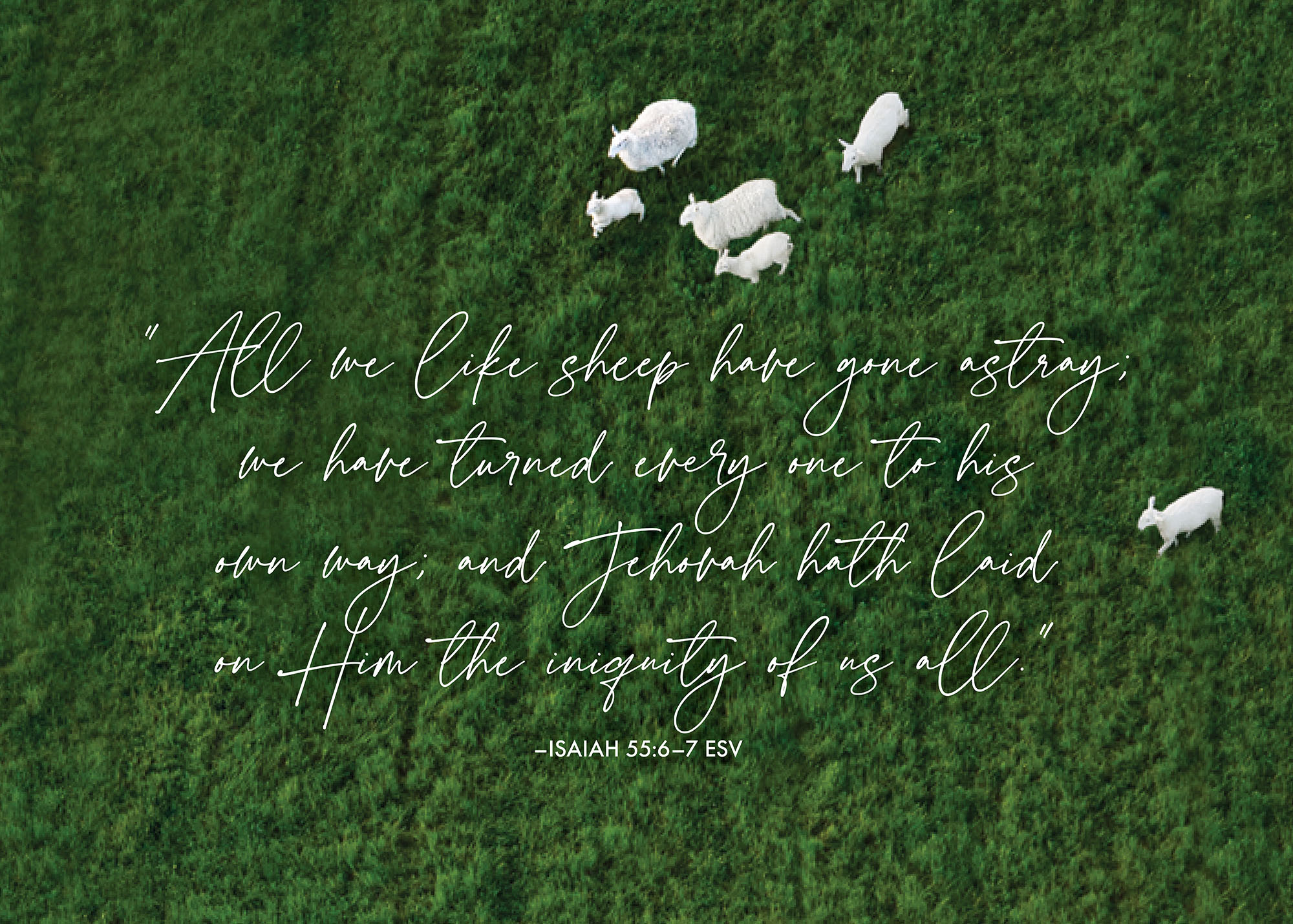
Sometimes, it takes being lost to truly appreciate the need to be found. And it is only in being found that we realize the depth of God’s love for us. The parables of the lost sheep (Luke 15:3–7), the lost coin (Luke 15:8–10) and the prodigal son (Luke 15:11–32) remind us of God’s relentless pursuit of us, illustrating His joy in finding what was once lost and restoring us with compassion and grace.

Coming Home

Sometimes, it takes being lost to truly appreciate the need to be found. And it is only in being found that we realize the depth of God’s love for us. The parables of the lost sheep (Luke 15:3–7), the lost coin (Luke 15:8–10) and the prodigal son (Luke 15:11–32) remind us of God’s relentless pursuit of us, illustrating His joy in finding what was once lost and restoring us with compassion and grace.

Jesus told the story of the prodigal son, as recorded in Luke. Like the parables of the lost sheep and coin, it too shows loss and redemption. In this parable a man has two sons. The younger son openly rebels against the father, demanding his inheritance and effectively wishing his father dead. When the son receives it, he travels far away to live a life of worldly pleasure. He loses his fortune and ends up a starving servant who feeds pigs. The older son stays home, obeying the rules, but leaves the father in another way. He begrudges his daily work and resents his father, especially when he hosts a celebratory homecoming for the repentant younger son.

Despite the differences between the two sons, both abandon the father. Yet the loving father offers each son unconditional love and redemption, saying, “Come home—abide with me, share in my joy, rest, peace, provision and security.”

Are You Lost?

Unfortunately, many believers today walk away from God. It may seem impossible to believe that our best life, joy and rest are found at home with Jesus. Some of us see ourselves as the younger brother, some as the older brother, or perhaps a combination of both.

We may decide like the younger brother that community, accountability and God’s definition of true joy aren’t realistic in today’s world. Instead, we seek joy in what the world offers, forsaking a biblical, grounded faith. Or perhaps we relate more to the older brother, feeling God has withheld good things from us, causing us to suffer as a result. We may look critically at the church, noticing its shortcomings, and compare ourselves to other churchgoers. We might even feel compelled to deconstruct everything, questioning God’s fairness. When we observe the state of the world, we may feel judgment or condemnation for our sins, especially considering how bleak things seem.

We get lost when our carnal nature craves pleasure, unlimited happiness and a carefree life with security in earthly things. We get lost when we believe we can find salvation in things outside of God. This lie is as old as time itself, beginning in Genesis 3, when the serpent twisted God’s words and sowed seeds of doubt: “Are God’s words really trustworthy? Is God good, or is He withholding the best from you? Can’t you find joy and life on your own terms?”

As we navigate temptation and false promises, we may be shocked to realize how far we’ve wandered from our true home. Spending time with pigs let the prodigal son understand how foolish he had been to leave his father’s home. When his eyes were opened to his father’s goodness, he made his way back home. A gentle reminder from the father let the older brother realize that nothing had been withheld from him. All the riches promised to him were still his, despite how unjust the world around him seemed.

Whatever the circumstance, if you choose to walk a bad path, blindly wander through life seeking the wrong things or a false god, hold a grudge against the church or God or in some other way are not with Christ, you are dangerously lost.

Come Home

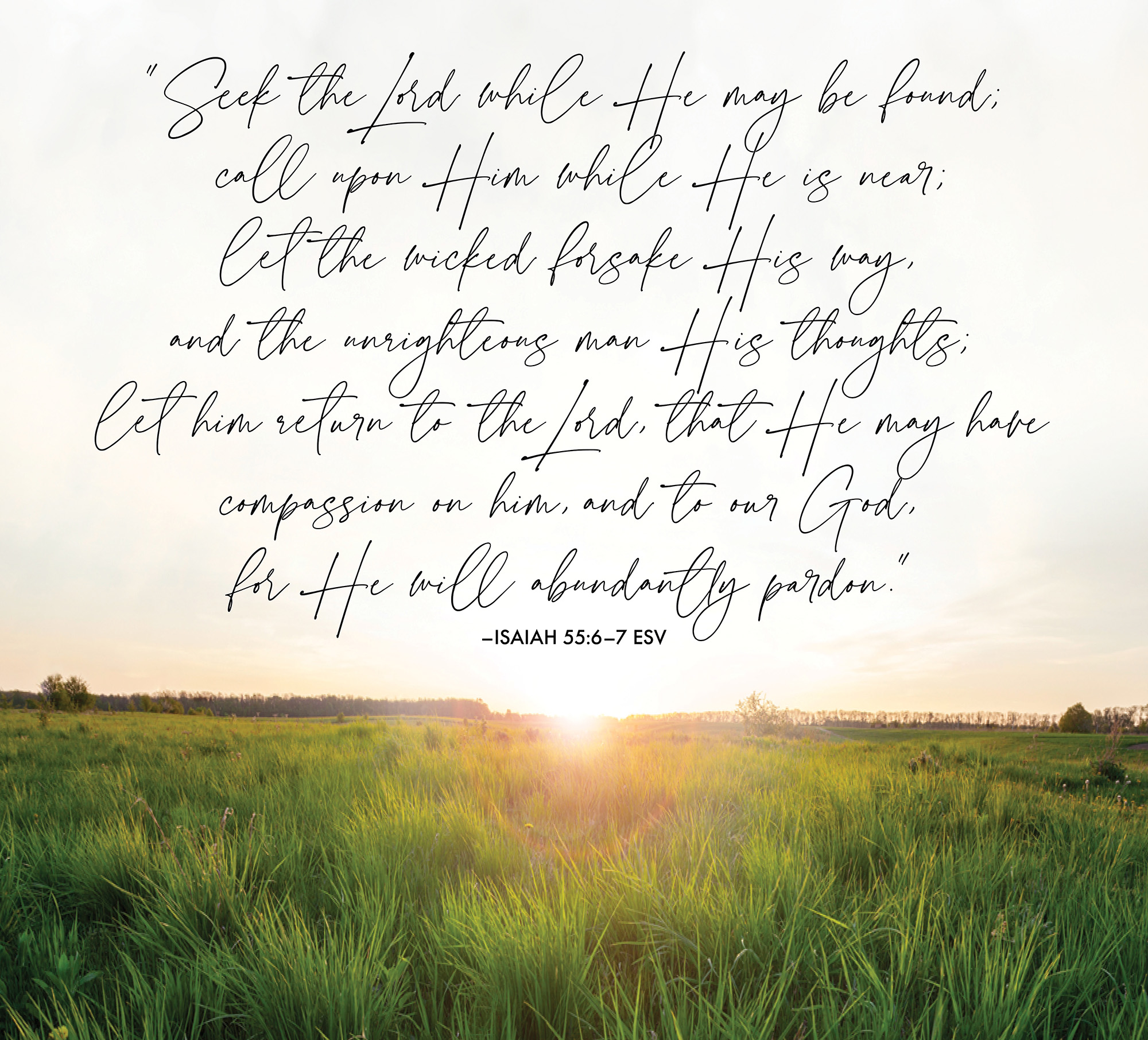
The parable of the prodigal son reminds us that no matter how far we wander, how lost we feel or how disconnected we become, we are always welcomed back home. God waits with open arms. In His grace, we learn that pursuing our own desires won’t lead us to true life or joy nor will rigidly following rules without experiencing His promises. If we find ourselves wayward, drifting or lonely, we must return to Jesus, who offers us abundant life, freedom and joy.

God’s kindness leads us to repentance (Romans 2:4). And when we return, He welcomes us with wide-open arms. In the story of the prodigal son, Jesus paints a vivid picture of the joy God feels when one of His children comes back: “And he arose and came to his father. But while he was still a long way off, his father saw him and felt compassion, and ran and embraced him and kissed him” (Luke 15:20 ESV). The father wrapped his son in the best robe, put a ring on his finger and threw a party. “‘For this my son was dead, and is alive again; he was lost, and is found.’ And they began to celebrate” (Luke 15:24 ESV). Repentance is not a somber affair. God celebrates and rejoices over the return of each repentant sinner.
Life at Home

Once we find our way back home, we need to build a strong relationship with Jesus Christ. It requires slowing down, being disciplined and trusting Him. It starts with ongoing communion with God through dialog and prayer—talking, listening, seeking guidance, offering gratitude, worshipping, repenting of sins, admitting mistakes and seeking forgiveness. Living a committed, Christ-centered life includes daily Bible study (see “Align with God’s Word”), loving and serving others (see “Activate Your Faith and Get Involved”), participating in church worship and fellowship (see “Be the Church”) and lifting up the Lord (see “Celebrate with Other Believers”).

Align With God's Word

An easy way to drift spiritually is to neglect time in the Bible. The enemy uses this subtle yet powerful tactic to pull individuals away from the way God calls us to live and away from a close relationship with Jesus. Hebrews 4:12 ESV says, “For the word of God is living and active, sharper than any two-edged sword, piercing to the division of soul and of spirit, of joints and of marrow, and discerning the thoughts and intentions of the heart.” Psalm 119:9 ESV asks, “How can a young man keep his way pure? By guarding it according to Your Word.” Just as forsaking a wholesome diet harms our physical health, neglecting daily time in the Bible weakens our spiritual well-being. The Bible is the daily bread that aligns us with what is true and good, especially in a world that constantly tempts us and tries to distract us from Jesus. Be certain you eat the only truly nutritious, life-giving bread. The Bible warns, “For the time is coming when people will not endure sound teaching but having itching ears they will accumulate for themselves teachers to suit their own passions, and will turn away from listening to the truth and wander off into myths” (2 Timothy 4:3–4 ESV).

Activate Your Faith and Get Involved

Pastor Billy Graham said, “You cannot pray for someone and hate them at the same time.” What he meant broadly is that when you get involved with others and into the messiness of their lives, you see that loneliness, hurt and despair go far beyond the differences the world makes us believe are important. One of the best ways we can orient our journey toward home and Jesus is to help others. When we see and experience the needs of others face-to-face, as opposed to behind a computer screen, we get reminded how Christ came after us when we were wayward.

Taking the directives of Scripture and allowing its truths to work themselves out in our daily lives is fundamental. Volunteers who help feed the homeless, counsel unwed or post-abortion mothers or tutor unprivileged children often say they feel ministered to far greater than any help they provide. This is because when we carry out the calls of a disciple, we begin to more fully understand the lengths that Christ went to for us.

If you feel distant from God, consider getting involved in your church and local community, putting your hands into action based on what your head learns from Scripture. Here are a few ideas:
• Serve at your church’s food pantry.
• Act as a Sunday morning door greeter.
• Volunteer at a local nonprofit that provides services to the poor.
• Sit with the elderly at a nursing home.
• Cook meals for first responders or medical personnel.

More

Christian Living

Stories

Read more
Be the Church

Sunday mornings used to be a sacred time for most families in America. Historically, church attendance stayed steady except during wars, crises and revivals when attendance skyrocketed. Until recently, the church acted as a place of refuge, spiritual renewal and a social hub. Jim Davis and Michael Graham report in their book, The Great Dechurching, that “About 40 million adults in America today used to go to church but no longer do. For the first time in eight decades that Gallup has traced American religious membership, more adults in the United States do not attend church than attend church.”

The reasons people leave church are varied. Some got out of the rhythm of attending church during COVID-19. Some families prioritize children’s sports and activities. Some people leave over political, ethical or racial disagreements, and others experience spiritual or physical abuse or pastoral malpractice. Davis and Graham asked the same question of everyone they surveyed: “What would it take for you to return to church?” The majority of the de-churched answered the same way: If a friend invited me.

1 Thessalonians 5:14 ESV says, “And we urge you, brothers, admonish the idle, encourage the fainthearted, help the weak, be patient with them all.” We are called to bear one another’s burdens. Sometimes we are the ones who are fainthearted, weak, weary and need someone to help us with our burdens. Other times, we stand in a season of strength and faith. God urges us then to step up and be the church to those who are struggling.

If you find yourself in a season of plenty, invite friends to church who have ceased attending, regardless of the reason. If you find yourself far from God, take a risk and reengage with the saints communing on a Sunday morning. The corporate practice of gathering reminds us of our place in God’s family.

Celebrate With Other Believers

Easter Sunday is a party. It’s a day set aside to remember that “Christ died for our sins in accordance with the Scriptures, that he was buried, that he was raised on the third day in accordance with the Scriptures” (1 Corinthians 15:3-4 ESV). It’s easy to get so focused on our suffering, sins and sorrow that we forget Jesus defeated sin and death and purchased a new reality for us. Celebration through worship is not a contradiction to the seriousness of sin. Rather, it shows that we take the work of Jesus seriously. When you find yourself despairing under the weight of the world, practice the discipline of celebration. Remind your heart of the abundant hope, life and joy Jesus’ blood purchased for you.

Celebration Conforms Us to the Image of Christ

Jesus prayed, “I am coming to you now, but I say these things while I am still in the world, so that they may have the full measure of my joy within them” (John 17:13 NIV). The kind of joy Jesus prays for us to experience does not result from ignoring the hard things in life. Jesus, more than anyone, was deeply acquainted with grief and sorrow, and He delights in His Father and spending time with people. He rejoices in the lost being found. Celebrating what Jesus celebrates shapes our minds and hearts to look more like Him.

Celebration Puts Sin + Sorrow into Proper Perspective

Joy is at its fullest when sin, suffering and sorrow sit in proper perspective to the power of the cross. That’s why we can join the saints in singing, “I’ve still got joy in chaos; I’ve got peace that makes no sense. I won’t be going under; I’m not held by my own strength. ’Cause I’ve built my life on Jesus, He’s never let me down. He’s faithful in every season. So why would he fail now? He won’t” (from “Firm Foundation” by Cody Carnes). This is the truth we celebrate: Jesus has never failed us, and He won’t start now.

Celebration Promotes Humility

Psalm 95 proclaims the bigness of God. He is a great God, King and Maker. The seas and mountains belong to Him. The whole world lies in His hands. Taking time to praise God reminds us how big and good He is and how small and needy we are. In Communion with God, Matthew Henry wrote, “To wait on God is to live a life of desire towards Him, delight in Him, dependence on Him and devotedness to Him.” With humble hearts, “Let us come into his presence with thanksgiving; let us make a joyful noise to him with songs of praise! For the Lord is a great God, and a great King above all gods” (Psalm 95:2 ESV).

More

Faith

Stories

Read more

Related Categories