Your cart

Product Title
Option 1 / Option 2 / Option 3
Subscription Plan Info
Product Discount (-$0)
COUPON1 (-$0)
$0
$0
-
+
Your cart is empty.
Enter discount code
Thank you! Your submission has been received!
Oops! Something went wrong while submitting the form.
Coupon1
Coupon2
Cart note
Subtotal
$0
COUPON2
-$0
Order Discount
-$0
Cart Total
$0

How to Blanch Vegetables

Blanching—quick-cooking fresh produce then plunging it in ice water—creates crisp-tender, colorful and more appetizing vegetables for platters as well as for stir-fries, salads, kabobs and other recipes. It brightens pigments and helps preserve foods’ flavor, texture and nutrition.
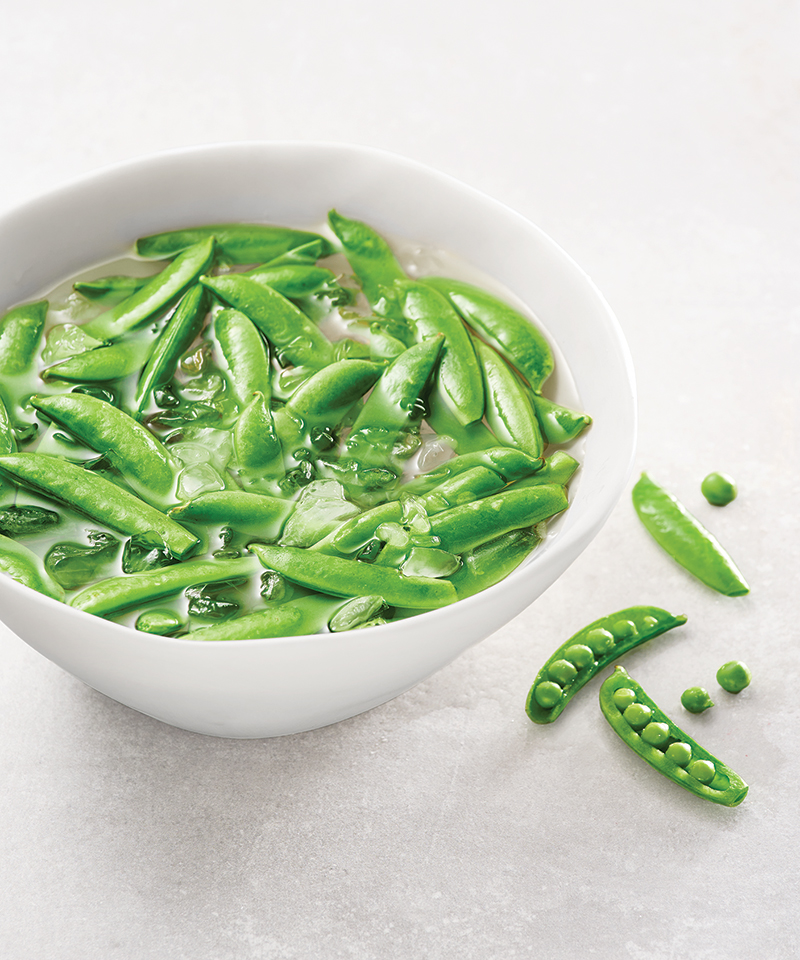
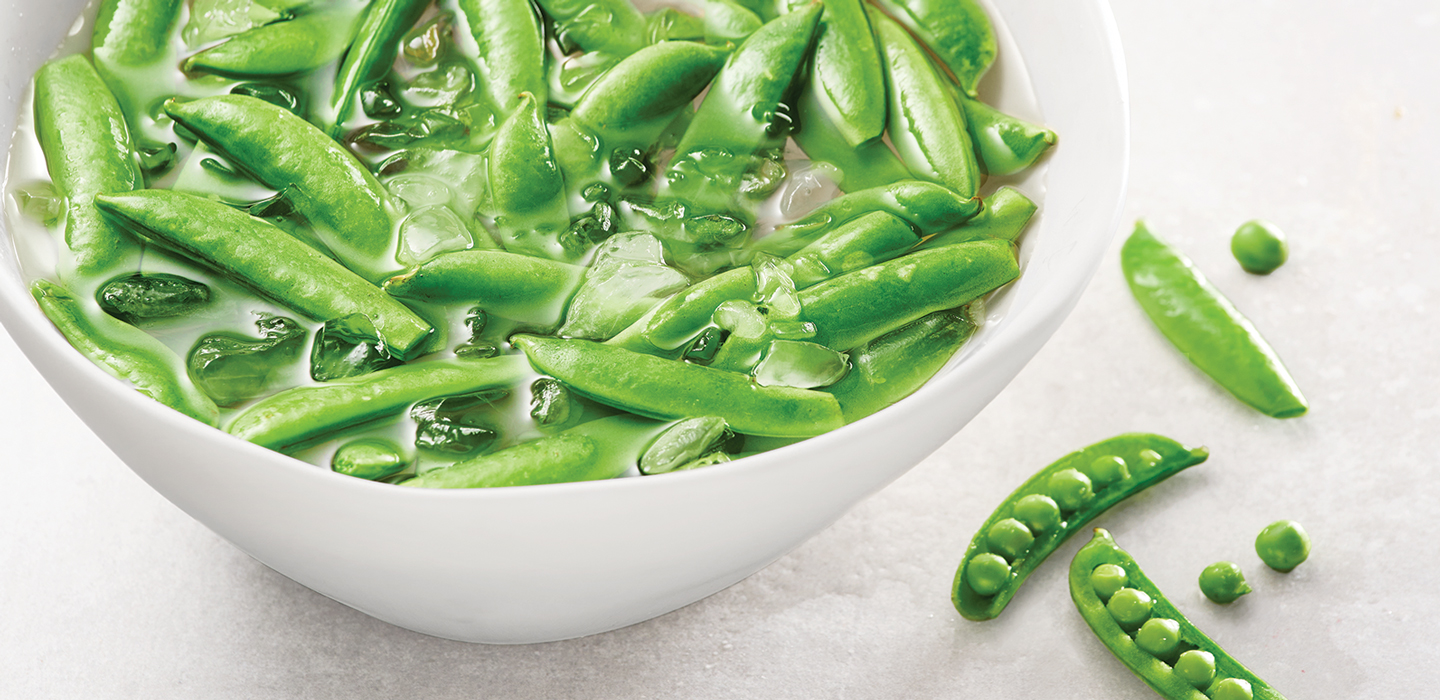
Bright green snap peas in a howl of ice water.

How to Blanch Vegetables

Blanching—quick-cooking fresh produce then plunging it in ice water—creates crisp-tender, colorful and more appetizing vegetables for platters as well as for stir-fries, salads, kabobs and other recipes. It brightens pigments and helps preserve foods’ flavor, texture and nutrition.
Bright green snap peas in a howl of ice water.

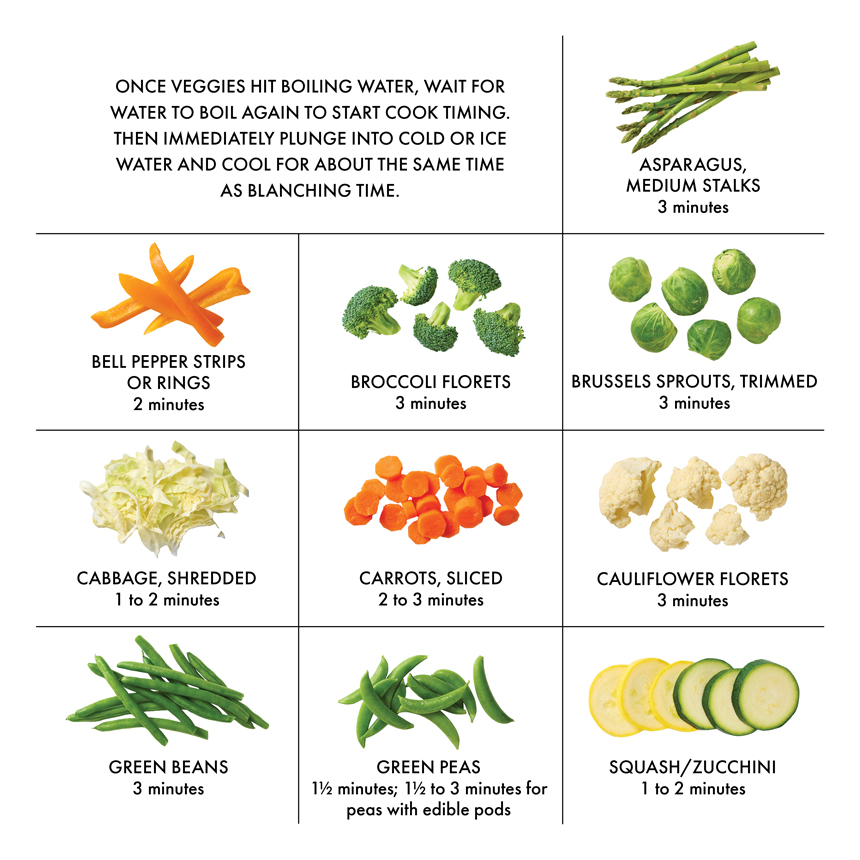
Blanching removes surface dirt and organisms and halts enzyme action that can deteriorate flavor, color, texture and nutrition. It softens produce and brightens its color before canning or freezing. The easiest blanching method is to prep produce—wash, trim, peel, if needed—then add to boiling water and cook just a couple minutes or more from the moment the water starts boiling again. Immediately plunging food into a bowl of ice water stops fibers from softening and brightened pigments from turning dull. Use a slotted spoon to transfer blanched food to the ice bath, then to a dry towel to drain. Or place produce in a wire basket, then into boiling water to blanch. Good veggies to blanch are those that take longer to cook such as green beans, snap peas, broccoli, cauliflower, carrots, artichokes, asparagus and Brussels sprouts.

Best Vegetables to Blanch
How to Blanch

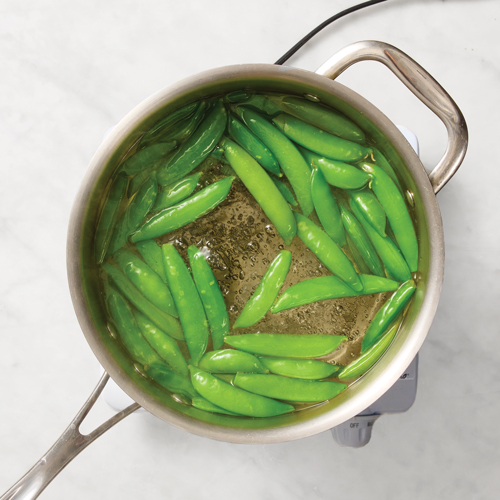
1. Fill a large mixing bowl with very cold (or ice) water. Bring a large saucepan of water to boil. Salt can be added to the water for taste but is not necessary. Place veggies in boiling water. Once veggies are in the water, wait for it to boil again. Then cover and cook for recommended time.

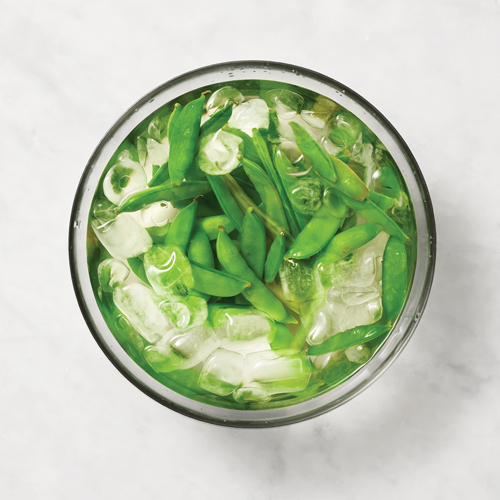
2. Use slotted spoon to remove blanched food and immediately plunge into cold water until cooled (this will take roughly the same amount of time it spent in boiling water). Add cold water or ice as needed. Drain blanched veggies before using or storing.

More

Vegetables

Stories

Read more
3 Ways to Use Blanched Vegetables
Pan-Seared Salmon with Farro and Peas

Partially cooking the sugar snap peas and green beans makes them crisp-tender and gives them bright color and fresh flavor to accompany salmon cooked in an apricot glaze.

View recipe

Spring Zoodles with Pickled Tomato-Herb Salad

Blanching the asparagus adds a bit of succulence to a light spring salad of raw veggie noodles and fresh herbs.

View recipe

Blanched Vegetable Platter with Lemon and Dill Tahini Dressing

A tangy dressing of tahini, garlic, lemon and fresh dill ramps up the flavor of blanched veggie dippers. Parboiling them makes them easy to bite into yet appetizingly crisp.

View recipe

More Ways to Enjoy Blanched Vegetables:

• Serve blanched green beans with toasted almonds or hazelnuts and a dressing of vinegar, oil and honey.

• Blanch large broccoli florets before grilling them.

• Blanch sugar-snap peas, cauliflower and broccoli before tossing in a stir-fry.

• Add blanched asparagus and smoked mozzarella to cooked pasta.

• Blanch Brussels sprouts before sautéing in butter and garlic.

• Mix a dip of mayo, mustard, sour cream and lemon juice; serve with blanched veggies.

• Blanch carrots and squash before roasting.

• Toss blanched shredded cabbage in pancetta and butter.

• Blanch bell pepper halves before stuffing and roasting them.

How to Store Blanched Vegetables

Place blanched veggies in freezer bags or containers with damp paper towel on top and store in fridge for 2 days. Some foods expand a bit; allow extra space. For freezing, store in freezer bags or containers up to 6 months.

More

Food

Stories

Read more

Related Categories