Your cart

Product Title
Option 1 / Option 2 / Option 3
Subscription Plan Info
Product Discount (-$0)
COUPON1 (-$0)
$0
$0
-
+
Your cart is empty.
Enter discount code
Thank you! Your submission has been received!
Oops! Something went wrong while submitting the form.
Coupon1
Coupon2
Cart note
Subtotal
$0
COUPON2
-$0
Order Discount
-$0
Cart Total
$0

How to Make Homemade Bone Broth

Boost your immune system, improve digestion, fight inflammation—and enjoy a bounty of other health benefits—by adding delicious, savory bone broth to your diet.
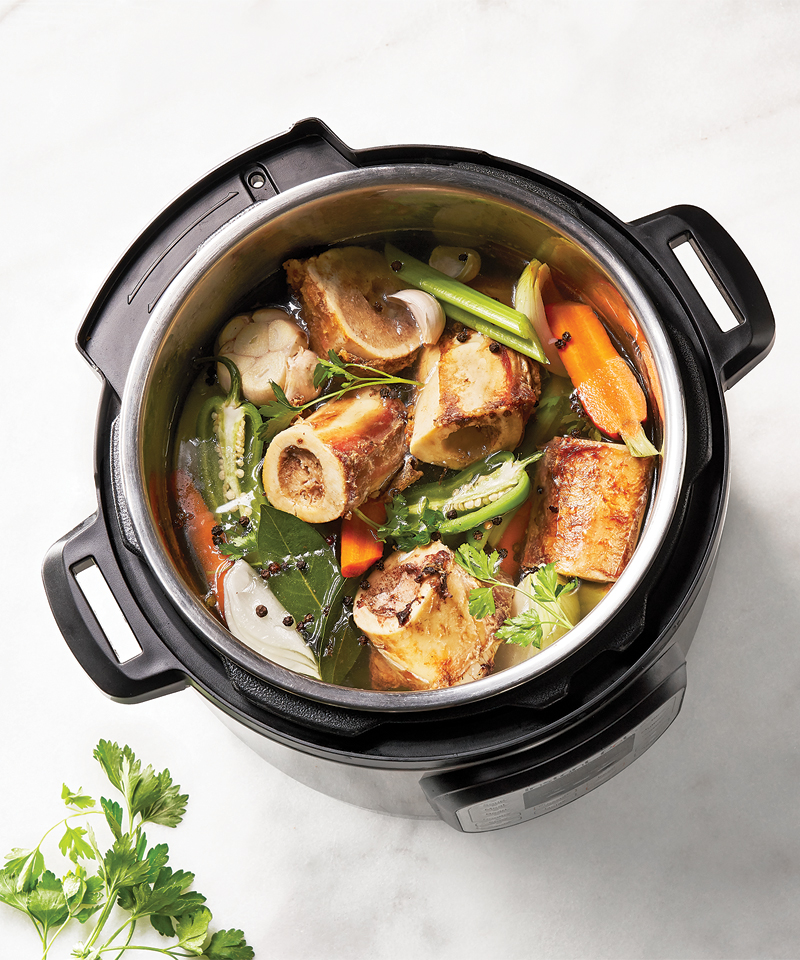
A pressure cooker full of meat, carrots, celery, jalapeño, onion, garlic, peppercorns, and fresh herbs.

How to Make Homemade Bone Broth

Boost your immune system, improve digestion, fight inflammation—and enjoy a bounty of other health benefits—by adding delicious, savory bone broth to your diet.

For centuries, civilizations have reaped the benefits of bone broth, using it as a natural health remedy and versatile meal ingredient for soups, stews, casseroles and just by itself as a nutrient-dense drink. Bone broth is made by simmering animal bones in water, often with spices, herbs or vegetables, to break down cartilage. The process slowly releases many vital nutrients such as collagen, iron, calcium, magnesium and phosphorus. The broth has become popular due to its desirable umami (meaty) taste and health benefits; and is found in restaurants and most supermarkets (sold in powdered and liquid form). Many store-bought options lack fresh flavor and often come at a higher cost, however. So here’s your guide to making (and using) your own bone broth.

Nutrients in Bone Broth

Collagen: Protein that repairs connective tissue and rejuvenates skin, hair and nails.

Iron: Essential for production of red blood cells, which carry oxygen throughout the body.

Calcium: Helps form and maintain bones and teeth.

Magnesium: Regulates nerve and muscle function; supports immune system; and aids in energy and protein production.

Phosphorus: Vital for the formation of bones and teeth. Helps the body make protein.

What You Need to Know About Animal Bones

For a proper bone broth, repurpose animal bones from previously cooked dishes or use fresh bones from a local butcher. Ask for bones and meat cuts that contain high amounts of cartilage.


For beef: knuckles, feet, marrow bones, T-bone. For added flavor, include cuts with small amounts of meat like oxtail, shank and short ribs. See the Beef Bone Broth recipe


For chicken: full chicken carcass, including back, neck and feet. See the Chicken Bone Broth recipe

How to Make Bone Broth

1. Place animal bones—along with desired vegetables—on a baking sheet and roast at 450°F until brown. After roasting, in a slow or pressure cooker place roasted ingredients along with desired spices, seasonings and enough water to cover bones. Cook according to the appliance and recipe. Times will vary dependent on type of bones.

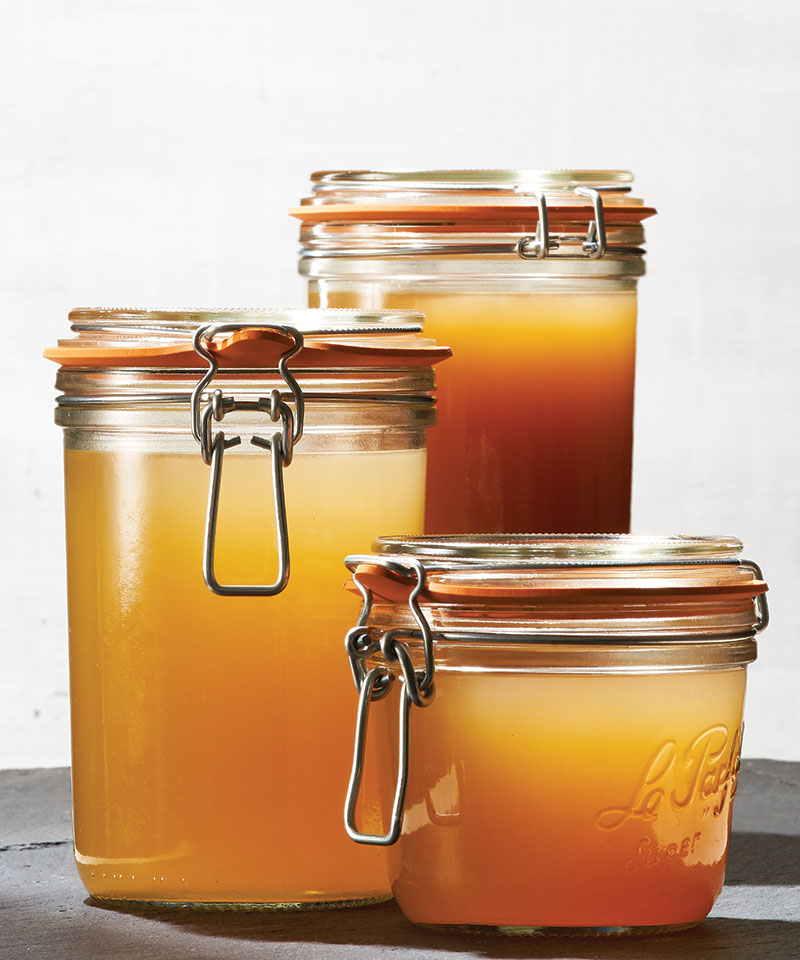
2. After cooking, strain liquid to remove any fat and solids. Ready to serve or store in airtight containers for up to four days in the refrigerator or freeze up to one month.

More

Cooking

Stories

Read more
3 Ways to Use Bone Broth
Chicken Bone Broth Risotto with Peas

Add hot chicken bone broth to arborio rice for a delicious risotto with peas, Parmesan and tarragon.

View recipe

Satisfying Soup

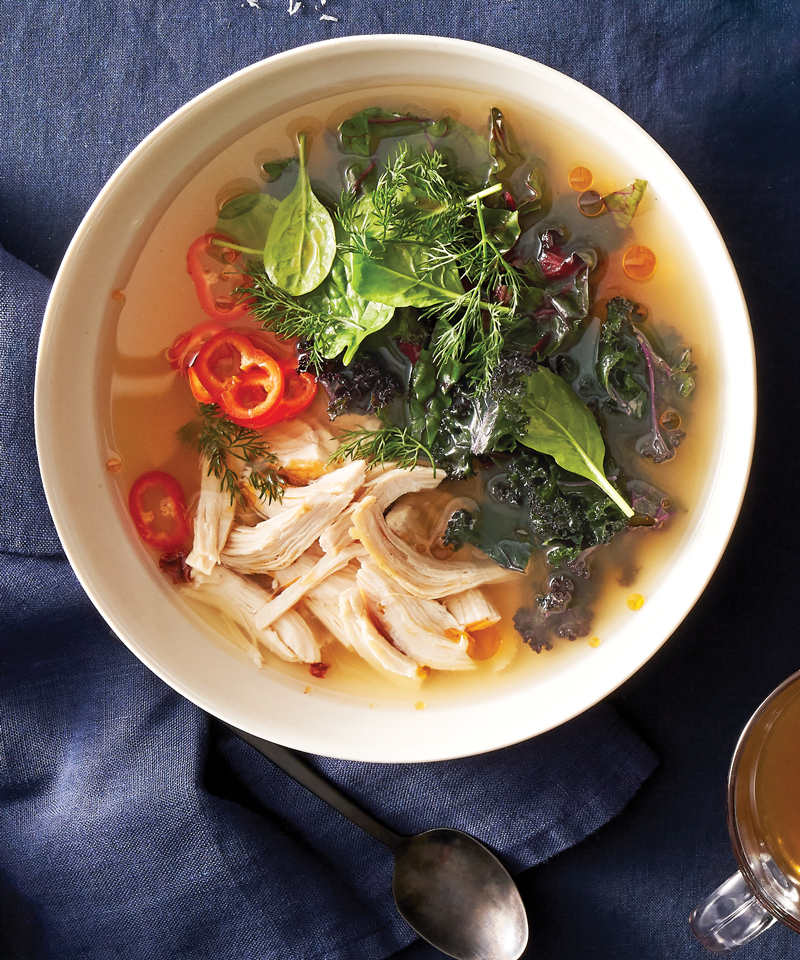
Use bone broth as the base for a fast, nutritious soup. Boil broth and add any ingredients you like: precooked meat; fresh, canned or frozen vegetables; pasta or rice; and herbs. This is a perfect way to use leftovers.

Bone Broth Drink

Not up for a meal? No worries! Drink your bone broth. Brighten the flavor with a few squeezes of lemon or lime. Or blend it into a fruit smoothie.

Bone Broth or Stock?

Believe it or not, there is a difference. Bone broth is typically simmered for a longer period of time (12 to 48 hours), which allows for a thicker consistency than stock due to the higher amount of broken down cartillage.


What to Look For?

A good bone broth should be semi-thick and have a gelatinous texture. When cooled, the broth exhibits a jelly-like consistency. The gel liquifies with heat and gives the broth body and mouthfeel.


Wide Variety

You can use more than just beef or chicken bones, as pork, turkey and fish are also popular choices and add unique nutrients and flavor. Don't be afraid to mix and match various types of animal bones in the same batch, just make sure the flavors work with your recipe.

More

Food

Stories

Read more

Related Categories