Your cart

Product Title
Option 1 / Option 2 / Option 3
Subscription Plan Info
Product Discount (-$0)
COUPON1 (-$0)
$0
$0
-
+
Your cart is empty.
Enter discount code
Thank you! Your submission has been received!
Oops! Something went wrong while submitting the form.
Coupon1
Coupon2
Cart note
Subtotal
$0
COUPON2
-$0
Order Discount
-$0
Cart Total
$0

How to Make Perfect Pie Crust

A flaky homemade crust makes a show-stopping pie, and this recipe fills the bill. We’ve tested it every way—blind-baked, slab-style, mile-high and intricately latticed for a delicious dessert or savory dish. Here’s how to ensure it holds up to tasty fillings, and how to shape, store and bake it like a pro.
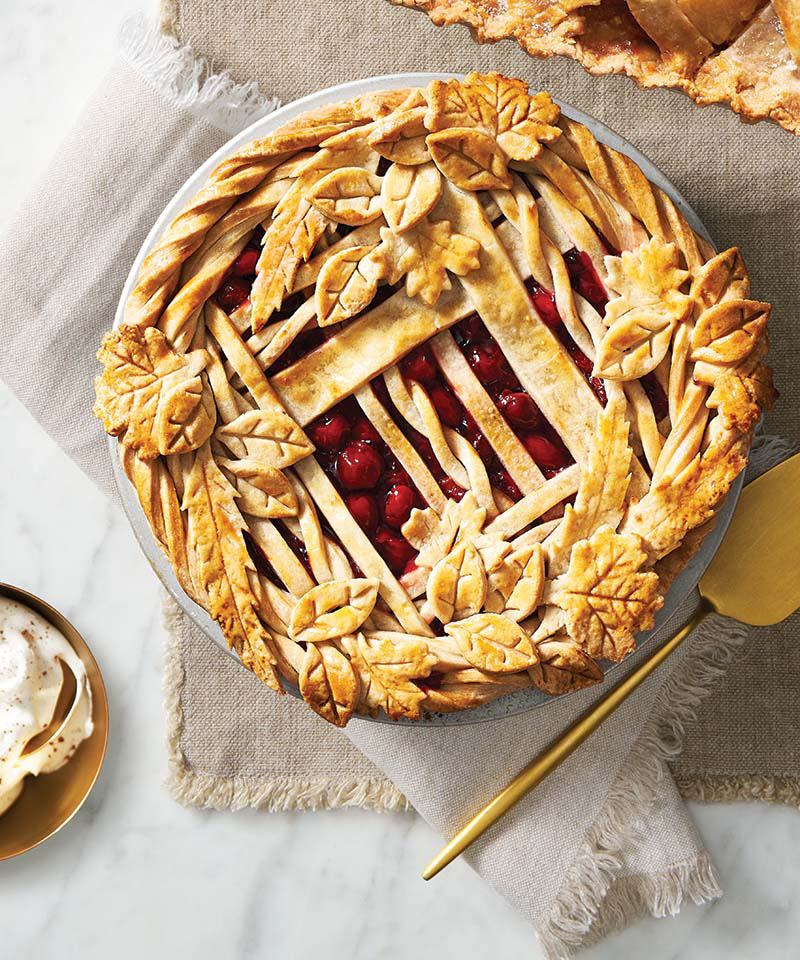
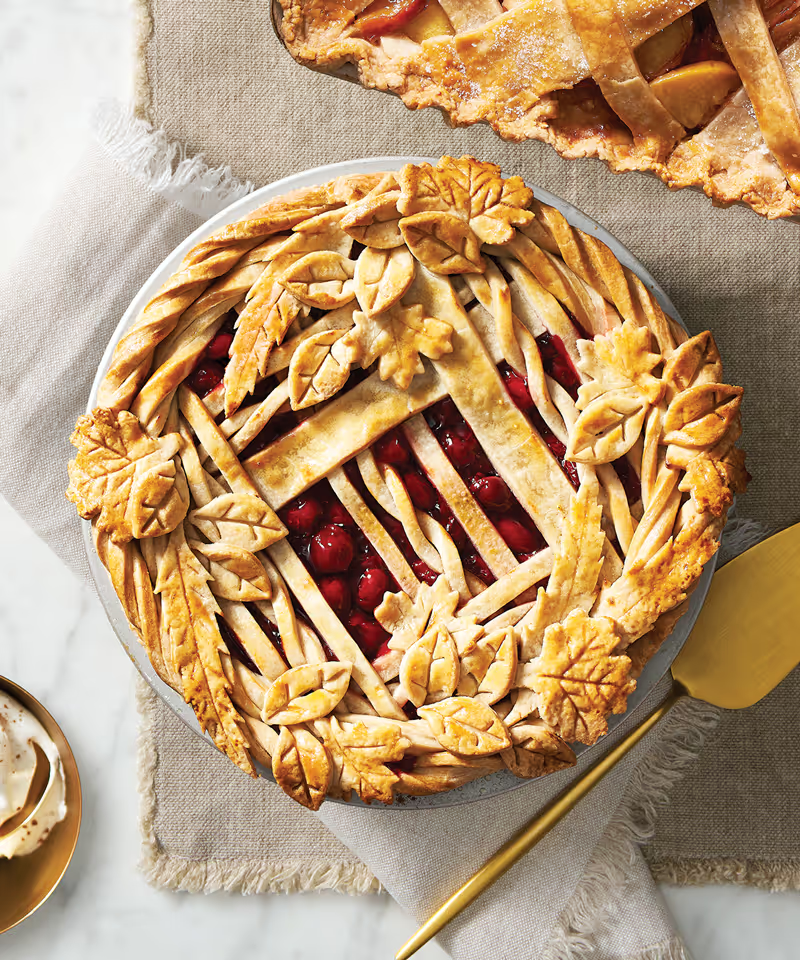
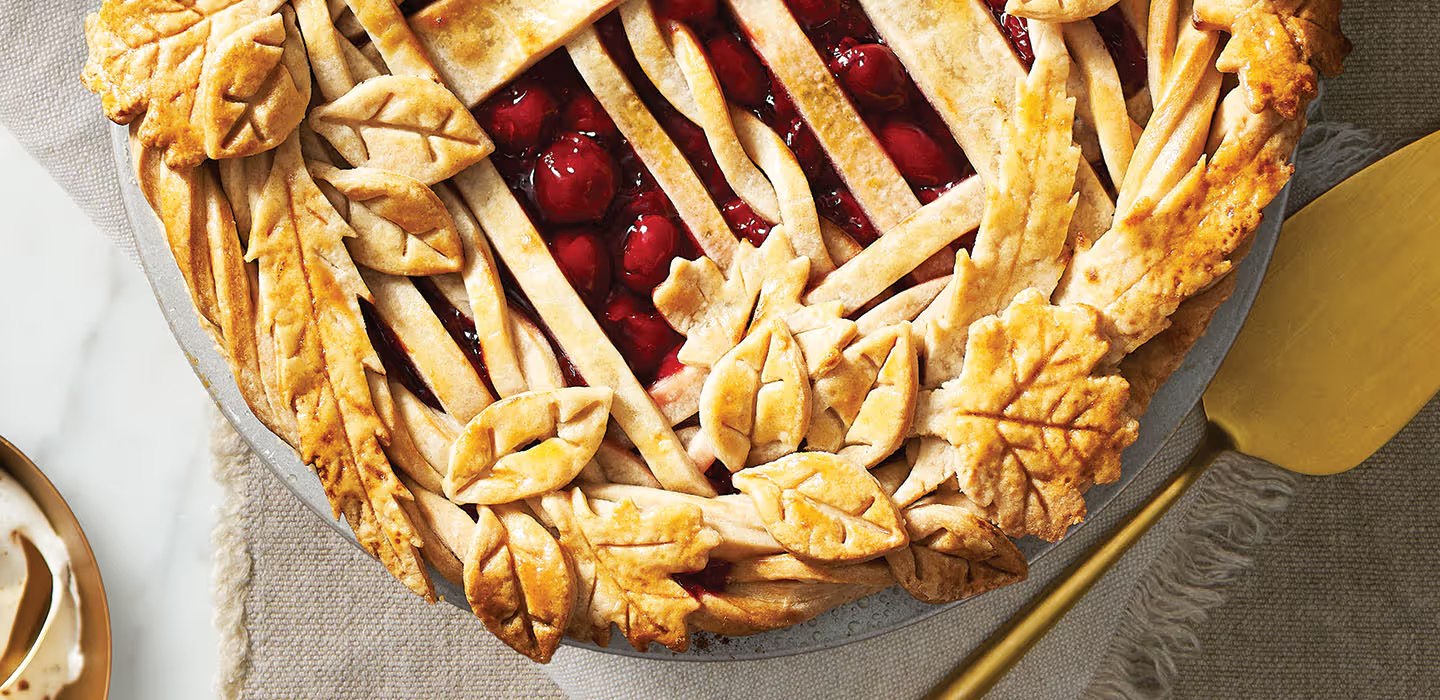
An overhead angle of a baked lattice fruit pie decorated with crust cut-outs of fall leaf shapes.

How to Make Perfect Pie Crust

A flaky homemade crust makes a show-stopping pie, and this recipe fills the bill. We’ve tested it every way—blind-baked, slab-style, mile-high and intricately latticed for a delicious dessert or savory dish. Here’s how to ensure it holds up to tasty fillings, and how to shape, store and bake it like a pro.
An overhead angle of a baked lattice fruit pie decorated with crust cut-outs of fall leaf shapes.

Pie crust is the golden, flaky crown that turns filling into a masterpiece. Its flavor is not overly sweet, just slightly salty and rich to enhance a sweet fruit pie or a cheesy quiche. The texture: tender yet crisp, with flaky layers that melt in the mouth and are sturdy enough for a generous filling of berries, apples or chicken and vegetables. A perfect pie crust’s ingredients and methods are simple: With a food processor or a pastry blender, cut chilled fat (butter, shortening or lard) into flour, then add small amounts of ice-cold water, tablespoon by tablespoon, without overmixing. Gently mixing to pea- or bean-size bits will allow the fat to create airy pockets as the dough bakes. Chill the dough, then roll it out on a flour-dusted work surface. Ease it into the pan, trim the dough at the edges and save the trimmings to fashion decorative features. An egg wash brushed over the crust before baking yields a shiny, deep golden finish. Press dough trimmings together to make decorative edges and tops. These can be as simple as crimped edging for a rustic single-crust pie, or more elaborate additions, such as a braid or twisted rope edge, an intricate lattice top or artistic cutouts in various shapes. Whatever your style, you’ll come back to this recipe again and again.

Savory Pies: Because this recipe is not overly sweet, it works for savory dishes as well: vegetable tarts, quiche, chicken pot pies, heirloom tomato galettes and more. Add flavor with fresh herbs (thyme, rosemary, sage), grated Parmesan or cracked black pepper.
Pie Crust Techniques

Start with dough for one crust or trimmings cut from the edge of the dough after sliding it into the bottom of the pan. Gently press dough together, roll out, cut and fashion into desired strips or shapes.

See the Pastry for Single Crust Pie recipe

See the Pastry for Double Crust Pie recipe

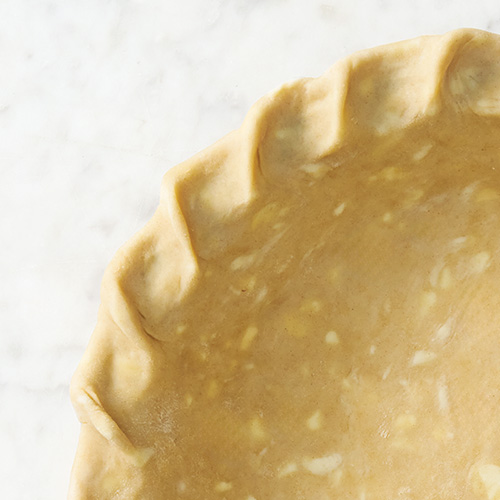
Rope: This easy pinching technique gives a rope-like look. Squeeze the pie dough at the edge at an angle between the thumb and bent index finger. Pull back with the thumb and “nudge in” the bent forefinger.

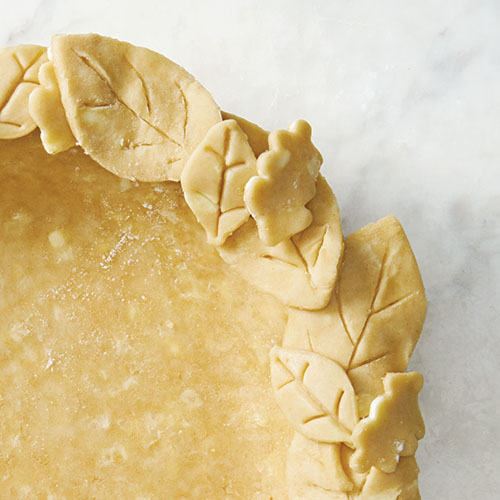
Cutouts: Roll chilled dough to about 1/8-inch thickness. Using small cookie cutters or simply freehand, cut out desired shapes. Lightly score patterns onto tops of shapes, if desired. Brush top pie crust with egg wash, which acts as “glue,” then attach cutouts over top. Brush cutouts with egg wash.

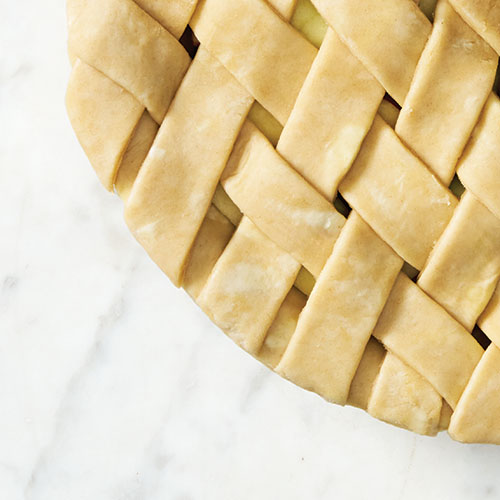
Lattice: With a knife or pizza cutter, cut dough into strips of desired lengths and widths. Lay some strips parallel across top of filling. Pull back every other strip almost toward other edge, then lay one strip perpendicular. Return pulled strips to original spot. Move to the next start of the parallel strips and pull back to edge; place another strip perpendicular. Continue pulling and laying strips.

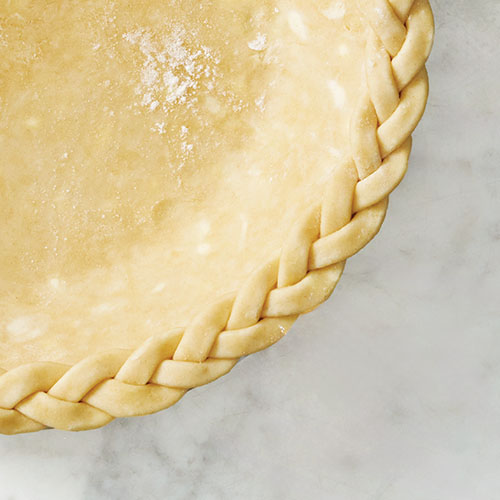
Braid: This is a good technique to dress up a pumpkin or other single-crust pie. Cut long ¼-inch-wide strips of dough. Lay 3 out on a work surface and begin braiding. Make as many braids as needed to line entire edge of pie. Brush egg wash onto edge, then attach braids to edge, pinching ends as needed to attach to the next braid.

What is Blind Baking?

This is baking the crust without the filling for pies with unbaked fillings such as custard, as well as for those with fillings that produce liquid, such as fruits, both of which would otherwise make the crust soggy. Chill the dough in the pan, line with parchment, fill with pie weights or dried beans so crust retains its shape, then bake. For fruit pies, partially bake the bottom crust, add the filling (and top crust if using), and bake a little more.

More

Baking

Stories

Read more
3 Beautiful Pies
Showstopper Cherry Pie

Lattice, twisted rope edging and leaf-shape cutouts create an elegant fall-motif work of art baked to golden-brown perfection. Note: Make 1 recipe Pastry for Double-Crust Pie.

View recipe

Blueberry-Orange Delight

Orange juice and zest lend a citrus note in each slice, piled high with juicy blueberry filling atop a single blind-baked crust. Note: Make 1 recipe Pastry for Single-Crust Pie.

View recipe

Peach Slab Pie

A baking-pan pie filled with cooked peaches is easy to cut into squares to feed a crowd. A top crust of thick and thin diagonal lattice strips gives it presence. Note: Make 1 recipe Pastry for Single-Crust Pie and 1 recipe Pastry for Double-Crust Pie.

View recipe

More

Food

Stories

Read more

Related Categories